Key takeaways
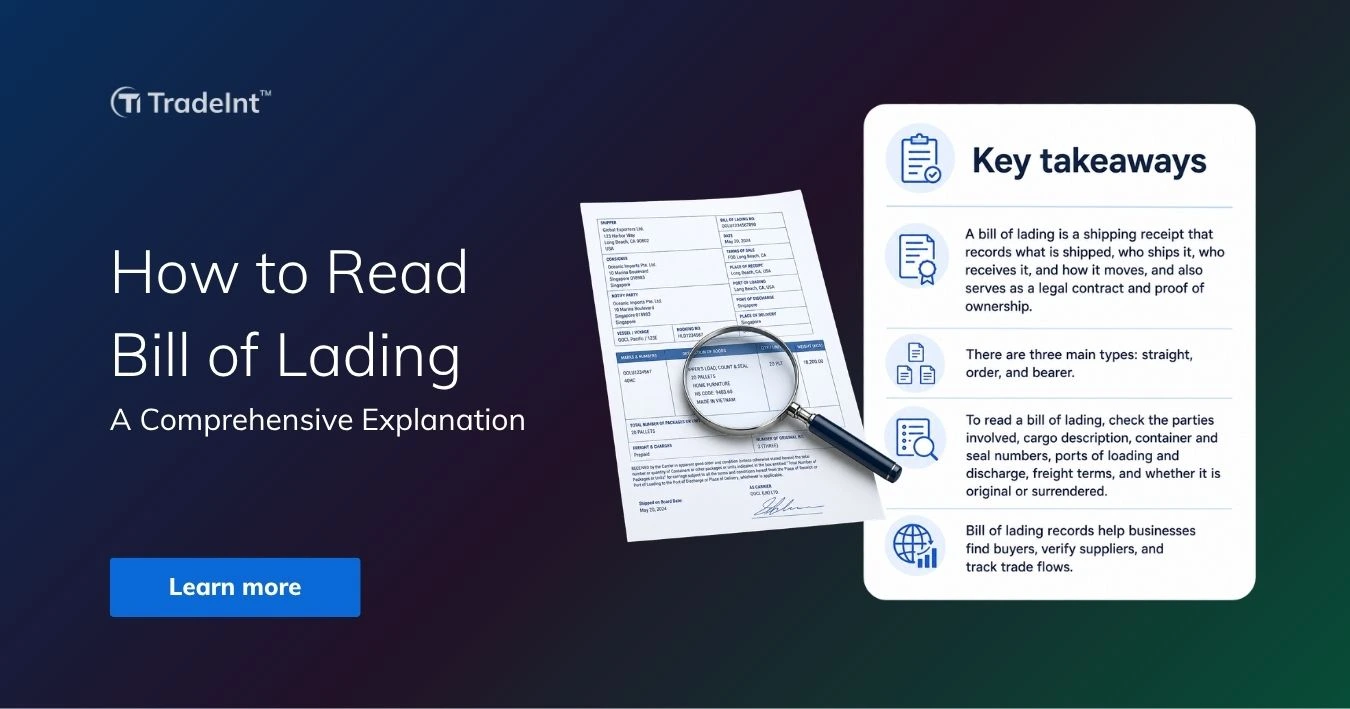
- A Bill of Lading (BOL) is a shipping receipt that travels with your goods, recording what is shipped, who ships it, who receives it, and how it moves. It also acts as a legal contract and proof of ownership.
- There are three main types: straight (non-negotiable, named consignee), order (negotiable, ownership transferable in transit), and bearer (claimable by whoever holds the document).
- To read a bill of lading, check the parties involved, the cargo description, container and seal numbers, ports of loading and discharge, freight terms (Incoterms), and whether it is an original or surrendered BOL.
- Beyond releasing cargo, each bill of lading is a record of a real transaction. Aggregated shipment records let businesses find buyers, verify suppliers, and track trade flows by product and corridor.
What is a bill of lading?
A Bill of Lading (BOL) is a detailed shipping receipt that travels with your goods from the sender to the receiver. It’s one of the most important documents in logistics because it records what is being shipped, who is shipping it, who is receiving it, and how it’s being transported.
It confirms that the carrier has received the items in good condition and is responsible for delivering them safely to their destination. Once the shipment arrives, the receiver uses the BOL to check that everything matches what was originally sent, the number of packages, their condition, and their details.

TradeInt is a global trade data platform providing access to over 10 billion verified import and export records. Its coverage spans over 200 countries and more than 80 customs data sources.
This article provides an overview of how to read a bill of lading. Use TradeInt to explore more detailed trade records and continue tracking this market as new data becomes available. Search shipment records →
📄 Consolidate Real BoL Records & Trade Data on TradeInt
A Bill of Lading is more than paperwork; it is a data source. TradeInt's Bill of Lading database holds global shipment records showing shippers, consignees, products, and ports you can search and verify. TradeInt's universal trade data
What is the purpose of a bill of lading?
The main purpose of the Bill of Lading is to create trust and clarity between everyone involved in the shipping process: the shipper, the carrier, and the receiver.
- It proves what is being shipped: The Bill of Lading lists what goods are being transported, where they are coming from, and where they are going. This ensures the shipper and the receiver agree on what is being sent. If anything goes missing or gets damaged, the BOL becomes the key document to verify what was originally loaded.
- It acts as a legal contract: When the carrier signs the BOL, it becomes a binding agreement that the goods will be delivered as agreed. This contract protects everyone involved if problems like loss, damage, or delays happen during transport.
- It serves as proof of ownership: The BOL is also a document of title, meaning it shows who legally owns the goods. This matters in international trade, where goods may change hands several times before reaching the final buyer.
- It supports accurate billing and payment: Because the BOL contains details like weight, size, and type of goods, it helps determine shipping costs and keeps invoices accurate. It keeps the shipper and carrier on the same page financially.
- It helps track shipments: The BOL lets all parties see where a shipment is at any point, making it easier to monitor delivery progress and ensure accountability, especially when several carriers are involved.
- It maintains trust and transparency in trade: By providing clear, verified information about each shipment, the BOL builds trust among shippers, carriers, and receivers. It reduces misunderstandings and supports smoother global trade.
How many types of BL are there?
Bills of Lading (BOLs) come in 3 main types: straight, order, and bearer, each serving a specific purpose in global trade. The type used depends on how the goods are being shipped, whether ownership might change hands, and how much flexibility is needed in the shipping process.
Understanding these different types is crucial for ensuring goods are handled correctly, ownership is clear, and every transaction runs smoothly from origin to destination.
Straight Bill of Lading
A straight bill of lading is a non-negotiable document that names a specific consignee, meaning the person or company meant to receive the shipment. It’s the most straightforward type of BOL.
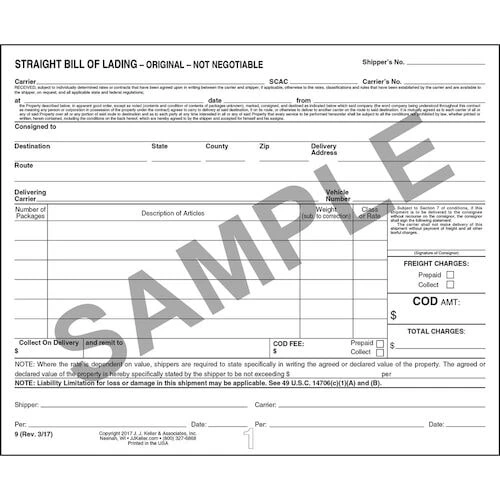
Straight Bill of Lading Sample Illustration
- The goods can only be delivered to the consignee listed on the document.
- It cannot be transferred to another party through endorsement.
- Commonly used for prepaid shipments, where the receiver has already paid for the goods.
- Ideal for transactions with established, trusted buyers where ownership does not need to change during transit.
Order Bill of Lading
An order bill of lading is a negotiable document that allows the ownership of goods to be transferred while the shipment is still in transit. It usually includes the phrase “to the order of [name of the party]”.
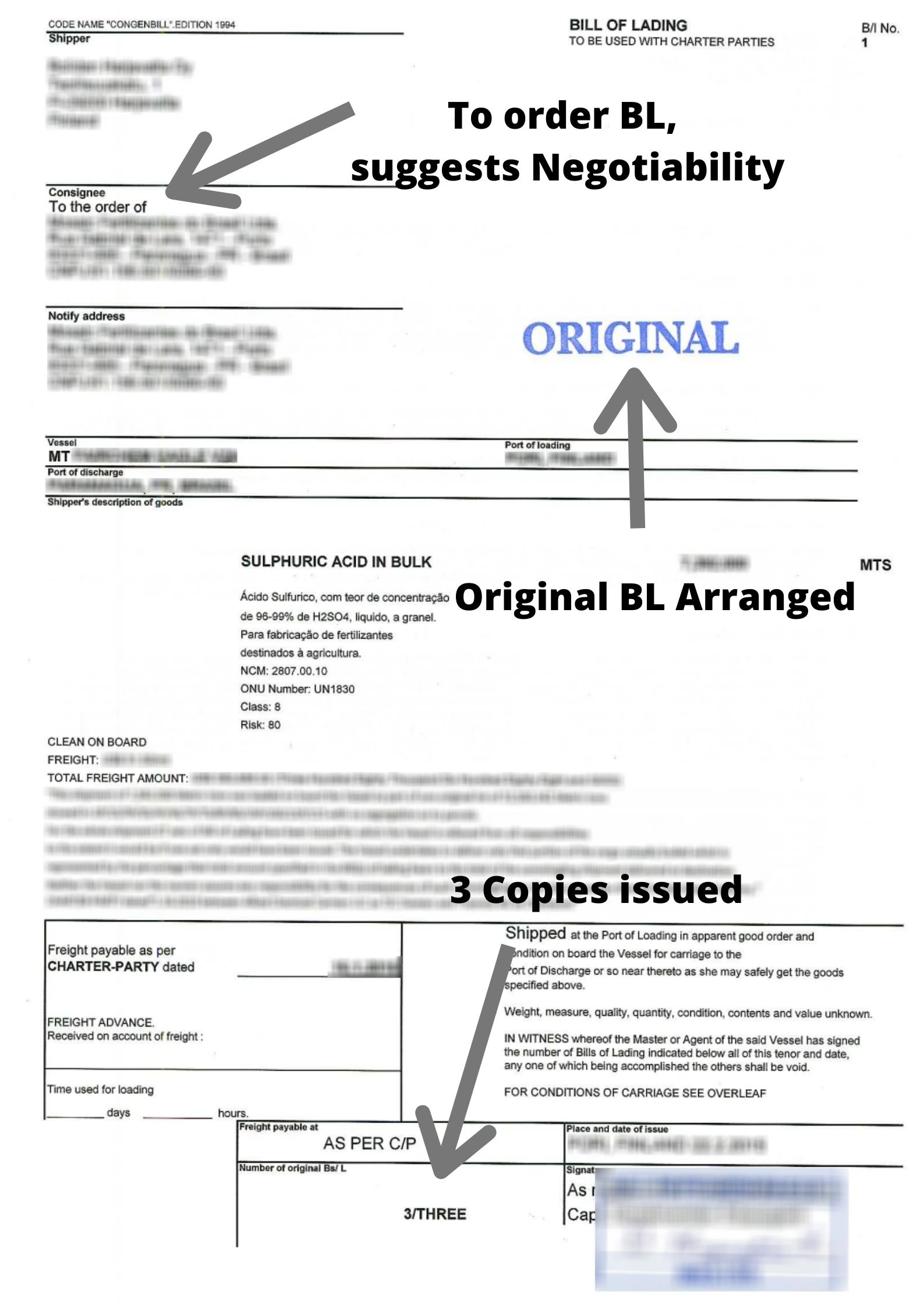
Order Bill of Lading Sample Illustration
- Ownership of the goods can be transferred by endorsing (signing) the document and handing it to another party.
- Offers flexibility in trade, allowing goods to be sold, traded, or financed before reaching their destination.
- Widely used in international trade and letter of credit transactions, where multiple parties (buyers, traders, and banks) may be involved.
- Common for high-value or large-volume shipments where ownership may change several times along the supply chain.
Bearer Bill of Lading
A bearer bill of lading is the most flexible and risky type. It doesn’t name a specific consignee but instead states that the goods are consigned “to the bearer” or “to the holder”. Whoever physically holds the document has the right to claim the cargo.
- Highly negotiable, as ownership transfers simply by handing over the document.
- The consignee’s name is not listed, offering a degree of anonymity for the holder.
- Rarely used today due to security and fraud risks, as losing the document could mean losing the right to the goods.
- Typically used in special or confidential transactions requiring privacy or rapid transfer of ownership.
What is in the bill of lading?
A Bill of Lading (BOL) captures all the essential details about a shipment: what’s being shipped, who’s involved, where it’s going, and how it should be handled. Besides special handling instructions or notes about hazardous materials, most Bills of Lading contain the following key information:
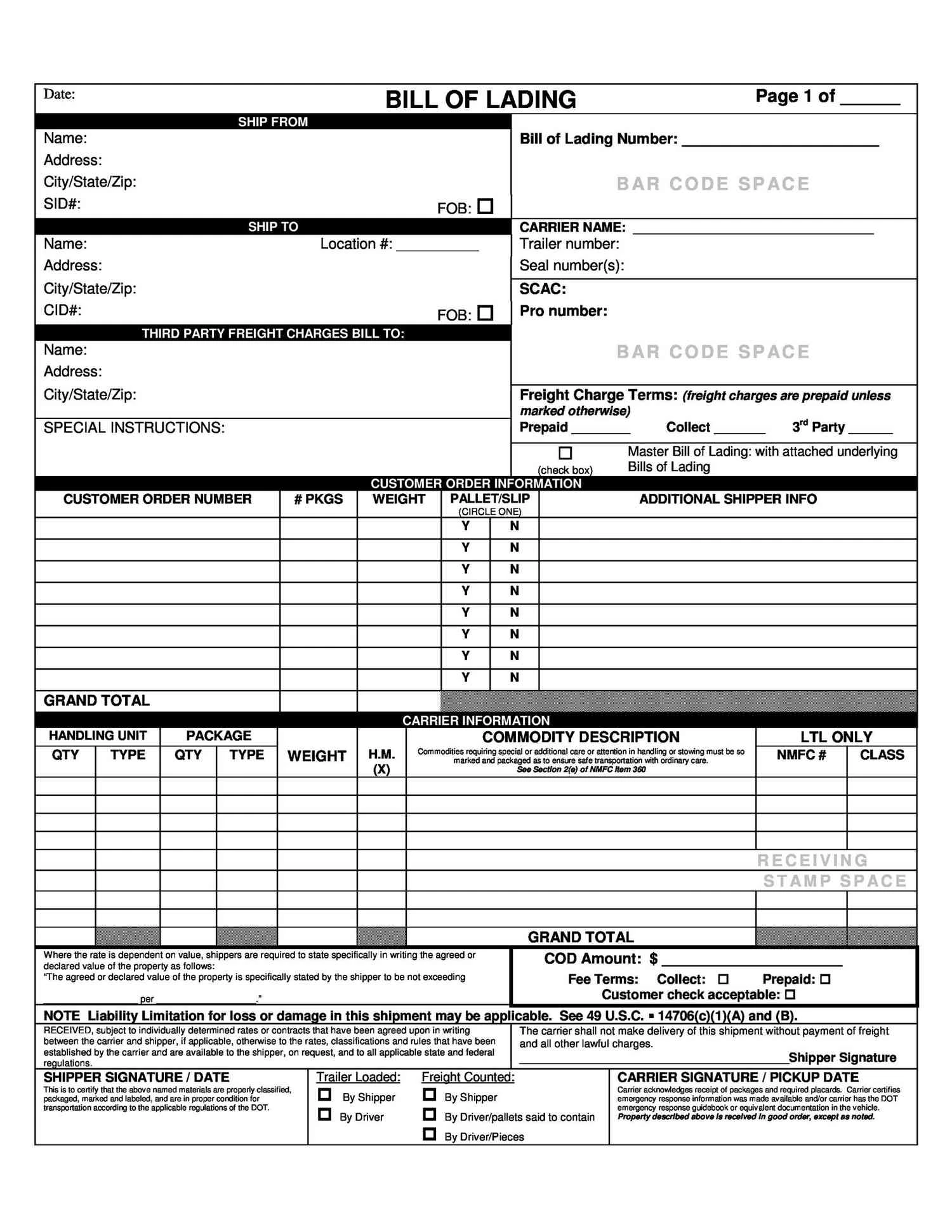 View full-size bill of lading →
Bill of Lading Document Breakdown Lists
1. Shipper Details
- Name and address: Identifies who is sending the goods.
- Contact information: Includes phone number or email for communication.
- Shipment origin: Specifies where the goods are being picked up.
2. Consignee Details
- Name and address: Identifies who is receiving the shipment (the consignee).
- Contact information: Ensures smooth coordination at delivery.
- Shipment destination: The final delivery point for the goods.
3. Carrier Information
- Carrier name and details: The transport company responsible for moving the goods.
- Carrier reference number: A tracking code or internal number used by the carrier to identify the shipment.
4. Description of Goods
- Detailed description: Type, quantity, and nature of the goods being transported.
- Weight, size, and dimensions: Helps determine shipping cost and logistics planning.
- Packaging details: Explains how the goods are packed (pallets, crates, cartons, etc.).
- Special handling instructions: Notes for fragile, perishable, or hazardous materials.
5. Marks and Numbers
- Identifiers or codes are printed on packages or containers to make tracking and verification easier.
6. Freight Charges and Payment Terms
- Freight charges: The total cost of transporting the goods.
- Payment terms: Specifies who pays for shipping — for example, “freight prepaid” (paid by shipper) or “freight collect” (paid by receiver).
- Currency and extra fees: Clarifies cost breakdown and payment details.
7. Shipment Details
- Date of shipment: When the carrier officially receives the goods.
- Pickup and delivery locations: Where the goods are collected and delivered.
- Transportation mode: Indicates whether goods move by road, rail, sea, or air.
- Incoterms: Defines trade terms (like FOB, CIF, or DDP) outlining who bears which costs and risks.
8. Bill of Lading Number
- A unique reference number is assigned to each BOL for tracking and record-keeping purposes.
9. Terms and Conditions
- Legal clauses that explain liability, insurance coverage, claims procedures, and other rules governing the shipment.
10. Signatures
- The authorized signatures of the shipper, carrier, and consignee confirm the accuracy of the information and acceptance of the shipping terms.
How to read a bill of lading?
Knowing how to read a bill of lading is essential for anyone involved in shipping, trading, or logistics.
A Bill of Lading contains key information that ensures your goods are shipped, handled, and received exactly as agreed. While every company’s format may look slightly different, most Bills of Lading include similar sections that you can learn to identify easily. Understanding each part helps you verify the shipment’s accuracy, avoid costly errors, and ensure smooth delivery.
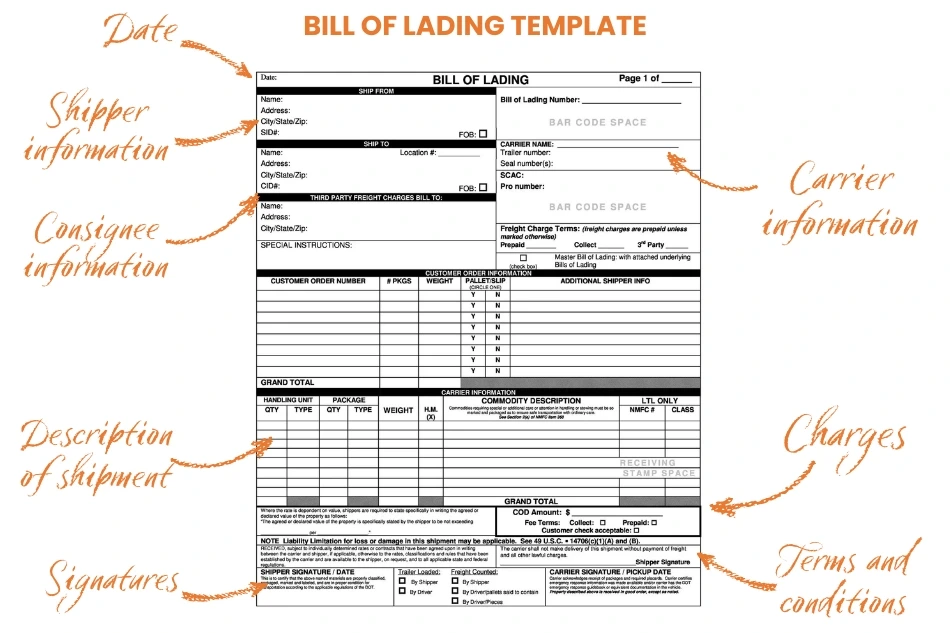
Bill of Lading Common Template
Here’s how to read a Bill of Lading effectively:
- Parties Involved: Check that the names and addresses of both the shipper (the sender) and the consignee (the receiver) are correct. This ensures the cargo is delivered to the right person or company and avoids confusion or delivery delays.
- Shipment Details: Look closely at the description of the goods. Verify the quantity, weight, and dimensions listed match what was actually shipped. This information also affects freight charges and classification, so any mismatch can cause billing issues.
- Container and Seal Numbers: For containerized cargo, confirm the container and seal numbers are accurate. These numbers identify your shipment and help prevent mix-ups or tampering during transit.
- Ports of Loading and Discharge: Ensure the origin and destination ports match your contract or purchase order. Mistakes in these locations can cause major routing and customs clearance problems.
- Freight Terms (Incoterms): Review the payment and delivery terms, such as FOB, CIF, or DDP. These determine who pays for shipping, who bears the risk, and at what point ownership of the goods transfers.
- Special Clauses: Look for phrases like “Said to Contain” or “Shipper’s Load and Count.” These notes define responsibilities and can limit carrier liability in the event of disputes or damages.
- Bill of Lading Type: Identify whether you have an original Bill of Lading (which must be presented to release cargo) or a surrendered BOL (released electronically). This affects how goods are claimed at the destination port.
Once you understand these core sections, reading a Bill of Lading becomes much simpler. Every part serves a purpose: confirming ownership, ensuring proper handling, and maintaining accountability between all parties.
✔ Lite ✔ Pro ✔ Premium ✔ EnterpriseTradeInt is a global trade data platform covering 200+ countries and 80+ customs sources. Learn about TradeInt →
🚢 Search Global Shipment Records on TradeInt
TradeInt's Bill of Lading search capability lets you filter shipment records by product, HS code, company, and port across global corridors.
Access and search trade records through TradeInt's 10 billion global trade database
What are the 5 common pitfalls when reviewing a bill of lading?
A Bill of Lading (BoL) serves as both a receipt and a legal contract for cargo transport, but even minor errors in its content can lead to compliance issues, costly re-ratings, or delayed shipments. Below are the most common pitfalls trade professionals encounter when preparing or reviewing a BoL.
Choosing the Wrong Bill of Lading Form
Selecting the incorrect form can expose shippers to payment or delivery risks.
A Straight Bill of Lading is non-negotiable and best used when payment has already been received. For first-time buyers or unpaid shipments, use an Order (Negotiable) Bill of Lading, which requires the original document to release the goods upon payment.
Using a “To Order of Shipper” consignment adds protection by specifying who may collect the goods at the destination. Always confirm that details across all paperwork match, inconsistencies can cause banks to reject a letter of credit.
Inaccurate or Vague Cargo Descriptions
Incomplete cargo details, such as missing product names, unit counts, or dimensions, are among the most common sources of customs delays. Replace generic terms like “general cargo” with precise product identifiers and packaging information.
For example, 5,000 cartons of paper cups loaded on five pallets, each box containing 100 cups.
This level of clarity supports accurate classification, insurance coverage, and valuation.
Missing or Incorrect Regulatory Details
If shipping hazardous materials, the BoL must specify product type, weight, volume, and safety instructions, along with the necessary permits or licenses.
Failure to do so may result in customs rejection, carrier penalties, or shipment detention. Always list the number of containers, total shipment weight, handling instructions, and emergency contacts, and send BoLs for hazardous cargo via secure courier to avoid document loss.
Inconsistent or Incomplete Documentation
Information across all shipment documents, including the commercial invoice, packing list, and letter of credit, must be identical. Discrepancies in value, quantity, or dates can raise red flags, delay customs clearance, or cause banks to deny payment.
Also, ensure service contract numbers are present and consistent across all copies. Missing or mismatched numbers can invalidate negotiated freight terms or lead to re-rated charges.
Overlooking Legal and Administrative Details
Errors in signatures, issue dates, or omission of special service instructions can make a BoL unenforceable. Verify all signatures from the shipper and carrier, and include any accessorial services such as inside delivery, hazardous handling, or temperature control.
Finally, review all terms and conditions carefully; carriers’ conditions may differ from the BoL itself, affecting liability, claim windows, and recovery rights.
Conclusion
Learning how to read bill of lading is about attention to detail. Each section reveals something crucial — from verifying the shipper and consignee information to confirming container and seal numbers, checking freight terms (like FOB or CIF), and reviewing special clauses that define responsibilities. The goal is to ensure everything matches your sales contract and shipping instructions before the goods move. Small oversights can lead to costly errors, shipment delays, or even ownership disputes.
By carefully reviewing key details, shipment descriptions, weights, Incoterms, ports of loading and discharge, and the type of Bill of Lading (original or surrendered), businesses gain full control over their cargo’s journey. When you understand how to read a bill of lading, you don’t just process paperwork; you secure your trade integrity.
TradeInt takes that clarity further. With real-time trade intelligence, verified supplier and buyer databases, and AI-powered analytics, TradeInt helps you move beyond documentation to confident decision-making.
Book a demo with us to explore how we can help streamline your international operations and ensure every shipment moves with precision and confidence.