This article explores the trends of crude palm oil Indonesia export from 2018 to early 2025. Indonesia remains the world’s largest producer and exporter of palm oil, with crude palm oil forming a critical pillar of its agricultural economy. However, the early months of 2025 have seen significant volatility in this sector, with declining export volumes, shifting global demand, tighter regulations, and fierce competition from neighboring Malaysia.
Crude palm oil, alongside other animal and vegetable oils, has long been Indonesia’s dominant export category.
Use our Global Trade Search Tool to explore the detailed crude palm oil Indonesia export trade records, including verified buyers, suppliers, shipment value and volume, and more.
What are the crude palm oil Indonesia export value statistic from 2018?
The value of crude palm oil Indonesia export has been on a downward trajectory after its peak in 2022. From 2018 to 2022, the figure has consistently remained above $5.5 billion. However, afterward, it gradually dropped below this threshold.
This downward trend was attributed to multiple factors:
• Factor 1: Seasonal holidays and adverse weather conditions. In March, many workers took time off to observe Ramadan and other local holidays. Simultaneously, the wet season continued across large parts of the country, further hindering harvesting operations and logistics.
• Factor 2: Strong increase in domestic demand. Exports of crude palm oil and refined palm oils from Indonesia fell by nearly 2% between February and March, as local consumption increased due to Ramadan.
• Factor 3: EU Deforestation Regulation (EUDR) requires all products entering the EU market to be deforestation-free, legally compliant, fully documented, and traceable. Requirements such as geolocation reporting, separating compliant and non-compliant supply chains, and proving land legality create a significant administrative burden, particularly for smallholders.
• Factor 4: Indonesia’s export of crude palm oil also faces intense competition from Malaysia, as the latter strengthens its downstream palm oil industries, such as oleochemicals and biofuels. Another advantage is that Malaysia has actively promoted sustainable palm oil production through initiatives such as the Malaysian Sustainable Palm Oil (MSPO) certification scheme, which makes its products more competitive in developed economies.
A closer look at the global crude palm oil price
Global crude palm oil price peaked in December 2024 at $1,200 per metric ton. This surge was largely driven by adverse weather in both Indonesia and Malaysia, which caused widespread disruption to harvesting activities. Also, sustained heavy rainfall reduced production and tightened global inventories.
Entering 2025, the figure continued to rise. By mid-May, crude palm oil was trading at approximately $915 per metric ton. This price climbed to around $980 per metric ton by the final week of June, marking a 5% increase from early June when it was $930 per metric ton. This steady rally reflects growing market optimism and steady buying interest.
What is the prediction for the crude palm oil price? In the coming time, the crude palm oil price is expected to remain steady, primarily due to a persistent supply deficit. The inventory level is likely to fall sharply year-on-year, causing prices to remain high. In addition, Indonesia’s increasing domestic biodiesel blending mandates (B40 and plans toward B50) continue to demand significant palm oil volumes, thereby limiting exportable supply and sustaining price support.
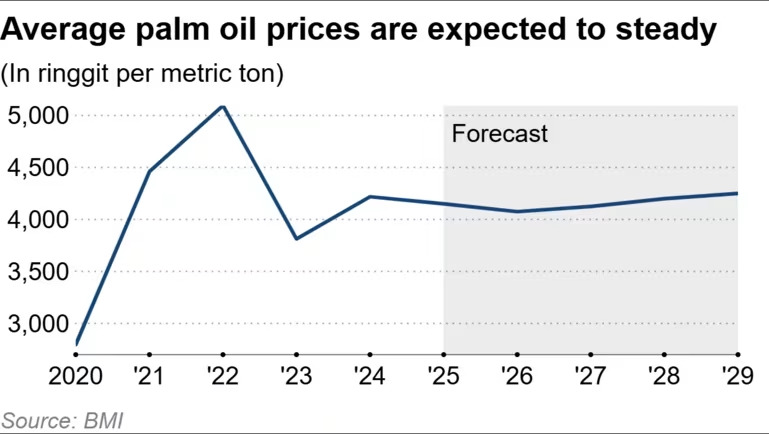
A linechart presenting the average palm oil prices are expected to grow steadily from 2020 to 2029, data sourced from BMI, and how this supports the crude palm oil indonesia export trade

TradeInt is a global trade data platform providing access to over 10 billion verified import and export records. Its coverage spans over 200 countries and more than 80 customs data sources.
This article provides a snapshot of Indonesia’s crude palm oil exports. Use TradeInt to explore more detailed trade records and continue tracking this market as new data becomes available. Search Indonesia crude palm oil export records →
Which are the leading export companies of Indonesia's crude palm oil?
In the first quarter of 2025, the www.tradeint.com data source identified the five most active exporters of Indonesia’s crude palm oil. They are:
• Incasi Raya
• PT Sinar Alam Permai
• Mekar Sarri Alam Lestari
• PT Citra Borneo Utama Tbk
• PT Sari Dumai Sejati
They collectively accounted for more than 62% of Indonesia’s crude palm oil exports during this period. These companies also play a significant role in the export of related palm oil products, including refined palm oil, palm kernel oil, and palm olein. These companies are the key enablers that help Indonesia’s crude palm oil reach a broader group of consumers across both regional and international export markets.
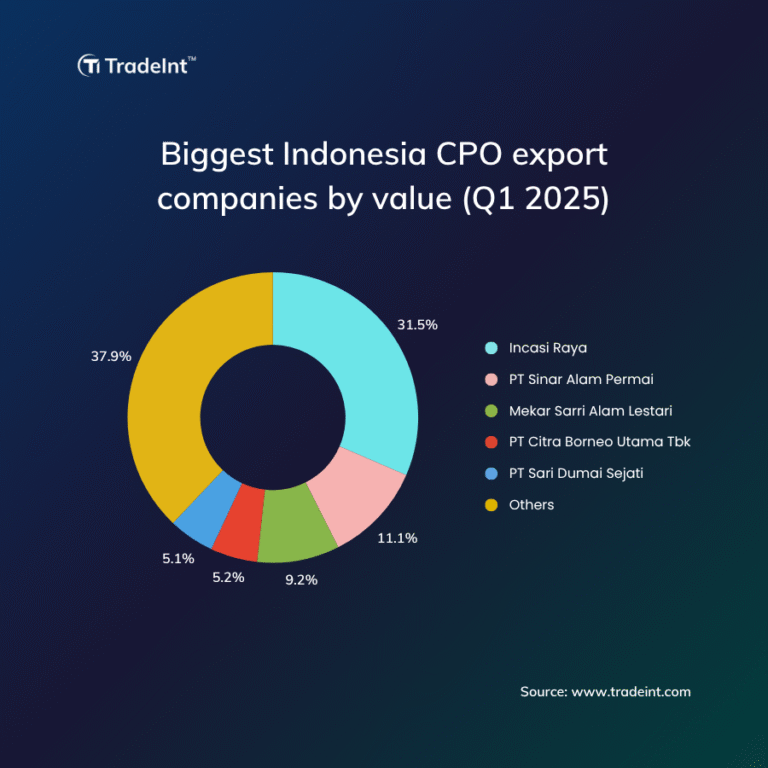
The chart graph presents the identified the five most active exporters of crude palm oil Indonesia export. These companies also play a significant role in the export of related palm oil products, including refined palm oil, palm kernel oil, and palm olein.
With Indonesia’s palm oil export market being dominated by the mentioned key players, your business challenge lies in navigating supply concentration, pricing power, and export reliability.
To access verified multi-tier supply chain relationships and prospect data to connect with the right trade partner, book a demo platform with our trade expert here.
Top 5 crude palm oil Indonesia export destination countries
Which country was the largest crude palm oil Indonesia export market by value?
According to TradeInt’s trade data source, in 2024, India was the largest export destination for crude palm oil Indonesia export, with an export value of over $5 billion, far surpassing the other markets in the top 5 by at least by 60%.
Apart from traditional consumers, namely Malaysia and India, Indonesia was also a key supplier of crude palm oil to emerging markets in Africa, which made three countries from this continent appear in the top 5 export destinations.

2 barchart graphs that present top 5 crude palm oil country importers comparison between 2023 and 2024, showing high reliancy on crude palm oil indonesia export
#1. India - $5.11 billion
According to records from the World Bank, in 2023, Indonesia exported around 3.1 million metric tons of crude palm oil to India, valued at around $2.63 billion. This marked a 10% increase compared to 2022’s figure, which was around $2.88 billion.
Palm oil continues to be the most important edible oil for India, representing more than half of the country’s oil imports. Indonesia’s crude palm oil is particularly attractive due to its competitive pricing, long shelf life, and neutral taste, which are all vital for large-scale consumption. India has attempted to promote domestic cultivation of palm oil, but the country’s terrain and climate have proven largely unsuitable.
Exports of crude palm oil to India are expected to have very limited growth. Indonesia’s plan to fund biodiesel subsidies and facilitate its expanding biodiesel blending requirement (B40 in 2025 and potentially moving forward to B50) will expand domestic consumption, thus diminishing the exportable supply available. The Indonesian government has also raised the export levy for crude palm oil to 10% from 7.5% in May 2025, which will further impact exports.
#2. Malaysia - $91 million
Malaysia, which imported about 3.6% of Indonesia’s crude palm oil exports in 2024, occupies a unique position as both a competitor and a buyer.
Despite its status as a leading palm oil producer, Malaysia supplements its domestic supply by importing crude palm oil from Indonesia for refining and biodiesel production.
These imports help stabilize Malaysia’s internal market and ensure a consistent supply. Although trade between the two countries is stable, it is not expected to expand significantly due to their shared focus on capturing global market share.
With Malaysia importing 3.6% of Indonesia’s crude palm oil exports in 2024, despite being a top producer, questions arise: Will rising biodiesel demand or global price shifts deepen Malaysia’s reliance on imports?
💡 Read more on Malaysia’s Top 10 Import Product List 2025 or book a demo consultation with our platform trade expert
#3. Kenya - 57 million
Kenya was the 5th largest export market for Indonesia’s crude palm oil, with an export value of $57 million in 2023. Importantly, Kenya ranks as the 8th largest importer of palm oil globally. Nearly 90% of its imports consist of crude palm oil, which is widely used by domestic industries for refining and enjoys the advantage of favorable tariff rates.
Although Kenya represents a relatively modest share of Indonesia’s export market, it holds significant potential. The country depends heavily on palm oil, which makes up over 90% of its total consumption of oils and fats, and with virtually no domestic production, Kenya relies almost entirely on imports to meet its needs. Kenya imports mostly crude palm oil to be refined locally and to also serve as a regional distribution hub, re-exporting about 10% of refined palm oil to neighboring countries such as Uganda, Rwanda, and the Democratic Republic of Congo.
This market’s demand is projected to remain high. It plans to import about 1.05 million tonnes of palm oil in the 2025/26 season, with crude palm oil making up about 90% of these imports. However, Malaysia currently supplies around 90% of Kenya’s palm oil imports, while Indonesia’s share has declined due to rising domestic demand and export constraints.
#4. Uganda - $33 million
The East African country stood as the second-largest importer of Indonesia’s crude palm oil. Uganda’s imports of palm oil have been significant since the country relies heavily on external sources. Uganda’s domestic palm oil production has long failed to meet the demand of both its local and neighboring consumers, despite the country’s weather being suitable for cultivation.
Due to this heavy demand, the potential to expand Indonesia’s crude palm oil presence in Uganda remains high. However, it may shift to suppliers from Malaysia and other alternative sources with better price competitiveness. In May and again, in June‒July 2025, Indonesia raised its export levy on CPO to 10% from 7.5% (effective May 17). This can lead to higher crude palm oil prices, which impacts its attractiveness abroad, especially given that Uganda is categorized as a developing country.
#5. Tanzania - $1.74 million
Palm oil is the most widely consumed type of edible oil in Tanzania, and the country is among the world’s largest importers of crude palm oil. 98% of its consumed palm oil is imported from South-East Asia. Its demand is expected to expand in the coming time as the country’s economy grows, which implies many exciting opportunities for businesses trading this product.
Based on TradeInt’s trade records database, Indonesia’s biggest competitor in exporting crude palm oil to Tanzania is Malaysia, which ranked first among the three suppliers. Price competitiveness remains a major concern in expanding Indonesia’s presence in these emerging markets.
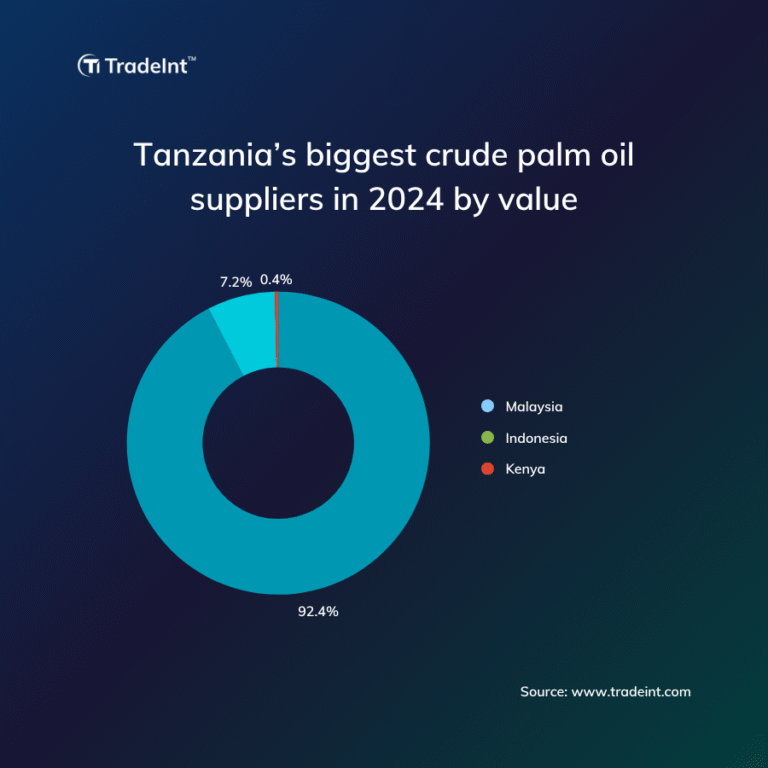
A chart graph shows that Tanzania's biggest top 3 crude palm oil suppliers in 2024 by value
Trusted export partners - The key to success in trading Indonesia's crude palm oil
As the crude palm oil Indonesia export landscape becomes more competitive and complex, success depends on more than supply. It requires strong, reliable partnerships. With shifting regulations, rising sustainability demands, and tightening domestic policies, working with savvy Indonesian exporters is essential to stay ahead.
That’s where a trade intelligence platform like TradeInt becomes essential. Our platform helps companies look for trusted crude palm oil exporters with proven experience and track records in both established and emerging markets. With the latest trade records and market insights, TradeInt makes it easier to find and connect with the right partners to help companies succeed in today’s complex trade environment.
Book a complimentary demo consultation with our expert and learn how TradeInt is the gateway to Indonesia’s most trusted crude palm oil exporters.