How to find importers by HS code using a trade data intelligence platform? Step-by-step guide
An HS code, or in full, Harmonised System code, is a standardised numerical identifier assigned to every traded product worldwide. The first six digits are universal across all countries, making it the most reliable search key when you need to identify who is actively importing a specific product.
Step-by-Step Guide: How to find importers by HS code using a trade data intelligence platform like TradeInt?
- Step 1: Select HS Code as search input: Enter a 6-digit HS code in TradeInt to pull global shipment records across 80+ countries from verified customs data.
- Step 2: Filter results to importers (consignees): Switch to the “Importers” view to see companies actively receiving shipments under that HS code, ranked by real trade activity.
- Step 3: Analyze Bill of Lading (B/L) data: Review shipment-level records to understand each importer’s purchase frequency, volume, suppliers, and sourcing patterns.
- Step 4: Run market and competitor analysis: Use TradeInt’s analytics to identify top importing countries, demand trends, and competitor buyer relationships in one view.
- Step 5: Export verified importer leads: Extract qualified buyers with confirmed trade history and enriched company profiles, including available contact details for targeted outreach.
Step 1: Select HS Code as your search type
On https://www.tradeint.com/search/, select HS Code from the search filter options alongside Product, Company, Importers, and Exporters. Enter your 6-digit code. One term. One click.
TradeInt instantly pulls matching shipment records from over 10 billion verified global trade data entries.
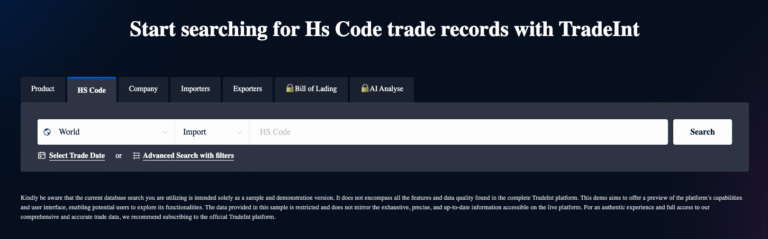
TradeInt Platform search page
Step 2: Filter results to importers
Switch the result view to Importers.
TradeInt returns a ranked list of companies actively receiving shipments under that HS code — drawn from live customs data and Bill of Lading records. Each entry shows the company name, country, and transaction history.

Search results show on TradeInt with the search term HS Code 270900
💡You may also: Discover the latest trade data of top countries on TradeInt.
Step 3: Access Bill of Lading records
Every shipment record on TradeInt links to its Bill of Lading — the official shipping document that confirms product type, quantity, origin, and the parties involved. This tells you exactly how often a company imports, in what volume, and from which suppliers.
No estimates. No aggregated statistics. Actual shipment-level data.
Step 4: Run a big data analysis with one click
TradeInt's analysis view consolidates everything into a single page view: country-level import statistics, competitor shipment activity, market share shifts, and emerging trade routes.
You can identify which markets are growing for your product, which importers are increasing order frequency, and where your competitors are already positioned — without building a single spreadsheet.
👉Try now: Search across 10 billion global trade records on TradeInt
Step 5: Export verified leads with contact details
TradeInt enriches every company profile with verified business registry data. Once you've identified your target importers, export the list, complete with available contact information.
You're not cold-prospecting from a generic directory — you're reaching out to companies with a confirmed, documented history of importing your exact product category.

TradeInt is a global trade data platform providing access to over 10 billion verified import and export records. Its coverage spans over 200 countries and more than 80 customs data sources.
This article provides an overview of finding importers by HS code. Use TradeInt to explore more detailed trade records and continue tracking this market as new data becomes available. Search importer trade records →
Global Trade intelligence fingertips
Turn HS code insights into real buyers with TradeInt with the following:
- Access over 10 billion verified shipment records across global markets
- Identify active importers using real Bill of Lading data
- Analyze buyer demand, volume, and frequency instantly
- Discover new markets and competitor activity with AI insights
- Build a qualified pipeline of high-intent buyers, not cold random leads
Why should importers and exporters use TradeInt?
Most exporters search for buyers using keyword queries or industry directories. The problem: those methods return companies that mention a product, not companies that are actively buying it.
TradeInt works differently. Every result is tied to a real customs record — a shipment that actually crossed a border, was logged by a customs authority, and entered TradeInt's validated database. When you search by HS code on TradeInt, you're not browsing a contact list. You're looking at the live import market for your product.
Global importers and exporters should start leveraging a trade data platform like TradeInt because:
- You target active buyers, not passive ones. Importers in TradeInt's results have recent, documented purchasing history — not just a company profile that mentions the product.
- You see the full competitive picture. TradeInt's Bill of Lading data shows which suppliers your target importers are currently working with. If a competitor holds the relationship, you know before you reach out.
- You find markets you weren't tracking. Import volume spikes in new geographies surface automatically when you analyse TradeInt's country-level data — early signals that most exporters miss entirely.
- You validate demand before committing. Shipment frequency, seasonal patterns, and volume trends across 80+ countries let you size a market from real data, not published estimates.
TradeInt covers 500+ million verified company profiles alongside its shipment records. The same platform that identifies your importer also provides their verified business details — all under one system.
👉 Explore more about TradeInt's solution for importers
Tips to find the right importers faster on TradeInt
- Stay at the 6-digit HS code.
Digits 7–10 are country-specific extensions that won't match across markets. The 6-digit code is globally standardised — it's what returns consistent results across TradeInt's 80+ country database.
- Apply a recent date filter first.
Heavy import volume from 18 months ago doesn't confirm current demand. Filter to the last 6–12 months on TradeInt before shortlisting any company. Active buyers have recent, recurring records.
- Prioritise shipment frequency over single-order volume.
A one-time bulk import can skew a company's total volume significantly. On TradeInt, check how many separate shipments an importer has on record. Consistent, recurring orders indicate an established procurement cycle — and a buyer worth pursuing.
- Use competitor shipments as a lead list.
TradeInt's Bill of Lading data links buyers to their current suppliers. Search your own product's HS code, identify which importers your competitors are supplying, and target those buyers directly.
They're already on the market. They already made purchases proven in import-export trade records. The only question is whether they're open to an alternative supplier.
- Cross-reference company profiles before outreaching.
TradeInt's company directory is enriched with verified business registry information. Before contacting an importer, review their full profile — size, trading history, active markets — to tailor your pitch to what they actually need.
Conclusion
Finding importers by HS code becomes far more effective when backed by real trade data, not assumptions. By using TradeInt, you can move from broad prospecting to identifying verified buyers with proven demand, clear purchasing patterns, and active market presence.
This approach helps you prioritize the right opportunities, reduce outreach risk, and improve conversion rates. With structured insights across shipments, companies, and markets, TradeInt enables a more precise, scalable way to grow your global customer base.
FAQ
- Which are the best trade database platforms to find importers by HS code?
Public sources platforms such as TradeInt, UN Comtrade, and World Bank WITS are commonly used for HS code-based trade analysis. They are useful for understanding overall trade flows, country-level imports, and market trends. However, they do not provide company-level importer details or shipment records, which limits their use for actual buyer identification.
In contrast, a platform like TradeInt connects HS code searches directly to 10B+ verified shipment records and 500M+ company profiles, allowing users to identify real importers, analyze sourcing patterns, and access detailed company insights in one workflow. This makes it significantly more effective for businesses looking to move from market research to targeted buyer acquisition.
Try: Search over 10 billion global trade data records on TradeInt
- How accurate is the HS code I should use when searching for importers — does the digit length matter?
Yes, the digit length of the HS code is critical, and using the correct format directly impacts your results.
The 6-digit HS code is globally standardized and is the most reliable level for identifying importers across multiple countries. It ensures consistency when searching international trade data. Using the correct 6-digit code ensures you capture the full global demand landscape, not just fragmented local data.
TradeInt is optimized for this global standard. When you search using a 6-digit HS code, it retrieves importer data across 200+ countries, ensuring consistent and comparable results from worldwide customs records.
You can test this directly here. This shifts your approach from guessing potential buyers to targeting companies with confirmed demand and recent transactions.
3.How accurate is the HS code I should use when searching for importers — does the digit length matter?
Yes, the digit length of the HS code is critical, and using the correct format directly impacts your results.
The 6-digit HS code is globally standardized and is the most reliable level for identifying importers across multiple countries. It ensures consistency when searching international trade data. Using the correct 6-digit code ensures you capture the full global demand landscape, not just fragmented local data.
TradeInt is optimized for this global standard. When you search using a 6-digit HS code, it retrieves importer data across 200+ countries, ensuring consistent and comparable results from worldwide customs records.
You can test this directly here. This shifts your approach from guessing potential buyers to targeting companies with confirmed demand and recent transactions.
- What information can I get about an importer from HS code trade data?
HS code-based trade data provides far more than just company names, especially when sourced from shipment-level records.
With a trade data platform like TradeInt, you can access:
- Verified importer identity (company name, country, profile)
- Shipment frequency and volume trends (how often and how much they import)
- Supplier relationships (with the exporters they are currently buying from)
- Product-level transaction details (based on Bill of Lading records)
- Market behavior insights (seasonality, growth trends, sourcing shifts)
- Available contact and business information for outreach
All of this is derived from real customs and shipping documents, not estimates or directory listings. To explore importer-level insights in action.
Public sources platforms such as TradeInt, UN Comtrade, and World Bank WITS are commonly used for HS code-based trade analysis. They are useful for understanding overall trade flows, country-level imports, and market trends. However, they do not provide company-level importer details or shipment records, which limits their use for actual buyer identification.
In contrast, a platform like TradeInt connects HS code searches directly to 10B+ verified shipment records and 500M+ company profiles, allowing users to identify real importers, analyze sourcing patterns, and access detailed company insights in one workflow. This makes it significantly more effective for businesses looking to move from market research to targeted buyer acquisition.
Try: Search over 10 billion global trade data records on TradeInt
Yes, the digit length of the HS code is critical, and using the correct format directly impacts your results.
The 6-digit HS code is globally standardized and is the most reliable level for identifying importers across multiple countries. It ensures consistency when searching international trade data. Using the correct 6-digit code ensures you capture the full global demand landscape, not just fragmented local data.
TradeInt is optimized for this global standard. When you search using a 6-digit HS code, it retrieves importer data across 200+ countries, ensuring consistent and comparable results from worldwide customs records.
You can test this directly here. This shifts your approach from guessing potential buyers to targeting companies with confirmed demand and recent transactions.
Yes, the digit length of the HS code is critical, and using the correct format directly impacts your results.
The 6-digit HS code is globally standardized and is the most reliable level for identifying importers across multiple countries. It ensures consistency when searching international trade data. Using the correct 6-digit code ensures you capture the full global demand landscape, not just fragmented local data.
TradeInt is optimized for this global standard. When you search using a 6-digit HS code, it retrieves importer data across 200+ countries, ensuring consistent and comparable results from worldwide customs records.
You can test this directly here. This shifts your approach from guessing potential buyers to targeting companies with confirmed demand and recent transactions.
HS code-based trade data provides far more than just company names, especially when sourced from shipment-level records.
With a trade data platform like TradeInt, you can access:
- Verified importer identity (company name, country, profile)
- Shipment frequency and volume trends (how often and how much they import)
- Supplier relationships (with the exporters they are currently buying from)
- Product-level transaction details (based on Bill of Lading records)
- Market behavior insights (seasonality, growth trends, sourcing shifts)
- Available contact and business information for outreach
All of this is derived from real customs and shipping documents, not estimates or directory listings. To explore importer-level insights in action.