How do countries in the Gulf find alternative buyers?
During a disruption, this is the fastest way to build a qualified buyer list grounded in actual trade activity rather than cold contact directories.
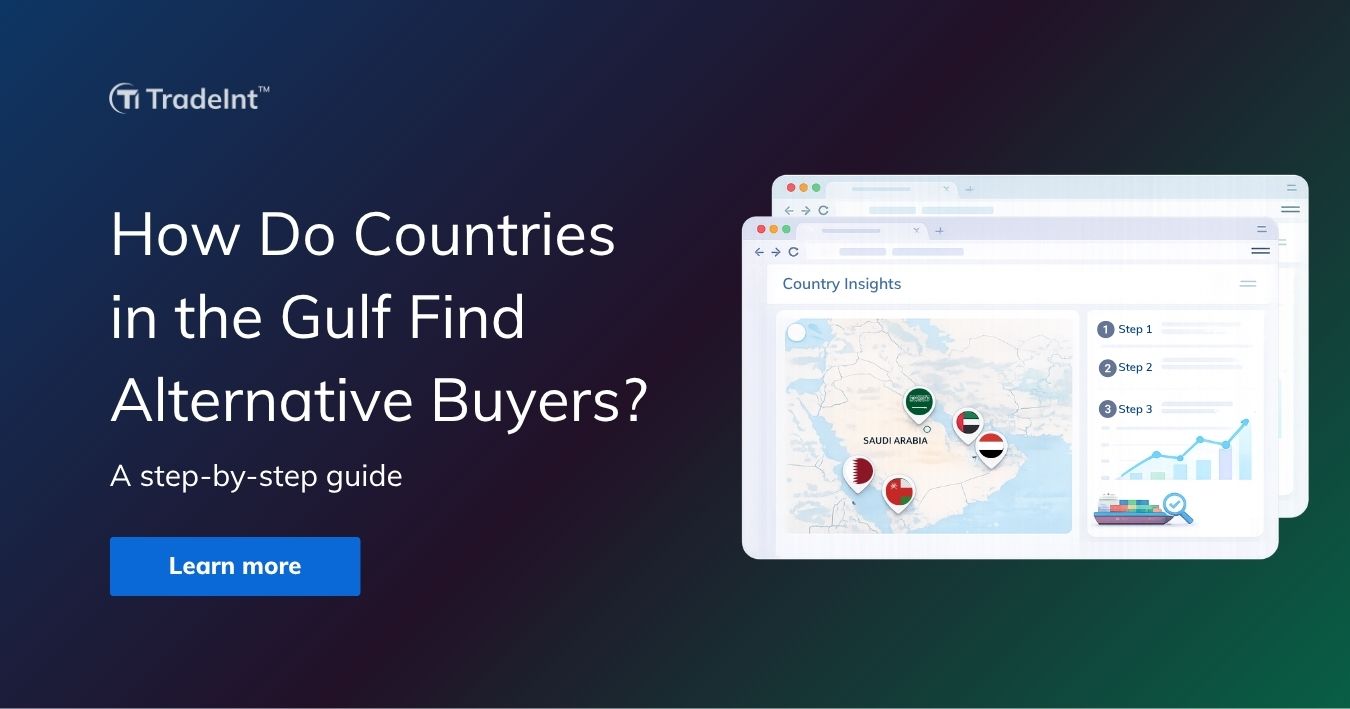
Step-by-step guide on how Gulf exporters can use TradeInt to find alternative buyers:
- Search by HS code or product to identify active buyers: Use TradeInt's SMART Search to find companies currently importing your product, especially those affected by disrupted routes.
- Filter buyers by accessible markets and logistics routes: Narrow results to countries reachable via alternative ports (e.g., Red Sea, Gulf of Oman) to ensure the feasibility of delivery.
- Validate importer demand using Bill of Lading data: Analyze shipment history to confirm volume, frequency, and supplier relationships—ensuring buyers can absorb redirected supply.
- Identify competitor buyers with disrupted supply chains: Track competitors' shipment activity to find "stranded" buyers whose supply has slowed or stopped, creating immediate opportunities.
- Analyze new markets with rising demand: Use country-level insights to discover alternative regions where imports are increasing despite disruption.
- Set alerts and monitor trade shifts in real time: Track buyer activity, shipment changes, and trade lane movements to time outreach when demand is most urgent.
💡 For more details, read the news about the Hormuz Closure situation and how it affects global oil supply.

TradeInt is a global trade data platform providing access to over 10 billion verified import and export records. Its coverage spans over 200 countries and more than 80 customs data sources.
This article provides an overview of finding alternative buyers for Gulf exporters. Use TradeInt to explore more detailed trade records and research potential buyers and revisit their trade activity as new data becomes available. Search global import records →
Step 1: Identify Target Buyers by Product or HS Code
The fastest way to find a replacement buyer is to search by your specific 6-digit HS Code or product keyword in the TradeInt SMART Search bar.
- Analyze Import Activity: Instantly filter results to see which companies are actively buying right now. The original data is critical here; it reveals which buyers are currently sourcing from disrupted routes and are therefore already motivated to find alternatives.
- Filter by Logistics: Use country-level filtering to target importers in regions accessible through your alternative route (e.g., filtering for European or North African buyers if you are loading from Yanbu).

TradeInt Product Search Tab
Step 2: Verify Buyers via Detailed Bill of Lading (B/L) Data
Every importer in TradeInt links to primary source shipping documents. Before approaching a prospect, review their B/L history to ensure they are a legitimate, high-volume fit.
- Confirm Capacity: A company showing consistent, high-volume imports over 12+ months has the established procurement infrastructure to absorb a new supplier relationship.
- Spot Supply Gaps: B/L data confirms a buyer's current partners. If their primary supplier is stuck behind a blockade, their procurement cycle is under strain, making your timing as an alternative supplier perfect.
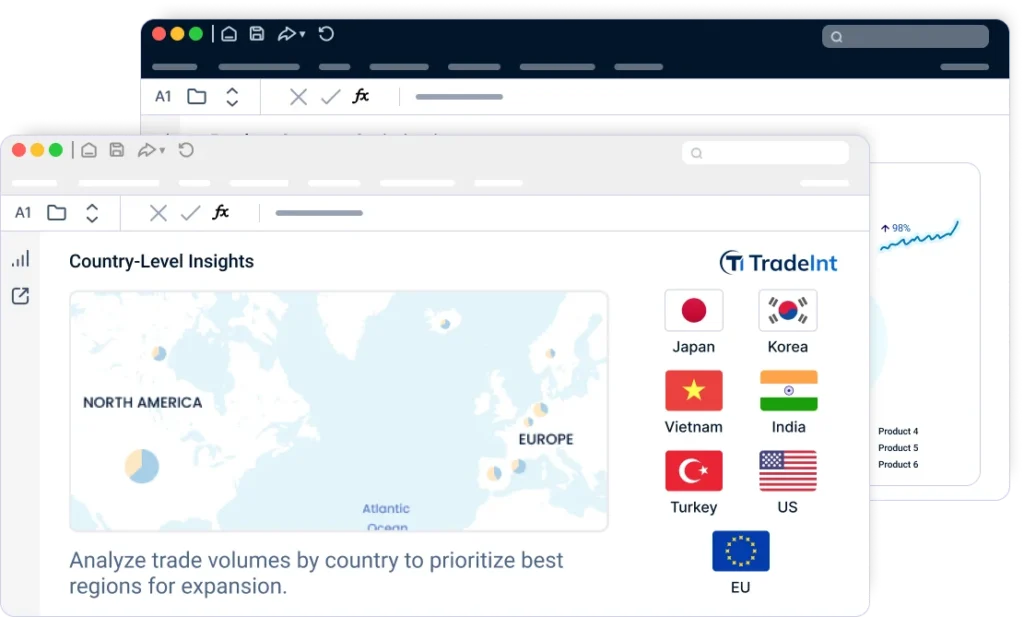
TradeInt country level insights overview
Step 3: Perform Competitor Analysis to Map Buyer Networks
If your competitors are facing the same logistics challenge, their clients are your highest-priority leads.
- Identify "Stranded" Buyers: Search for your competitors' names to see exactly who they are exporting to. Filter this view for competitors whose shipment frequency has stalled.
- Offer Better Alternatives: Use this map to approach companies whose current supply chain is compromised. These buyers already know the product; they just need a reliable way to get it. TradeInt makes these relationships visible at the shipment level—shipper to consignee.
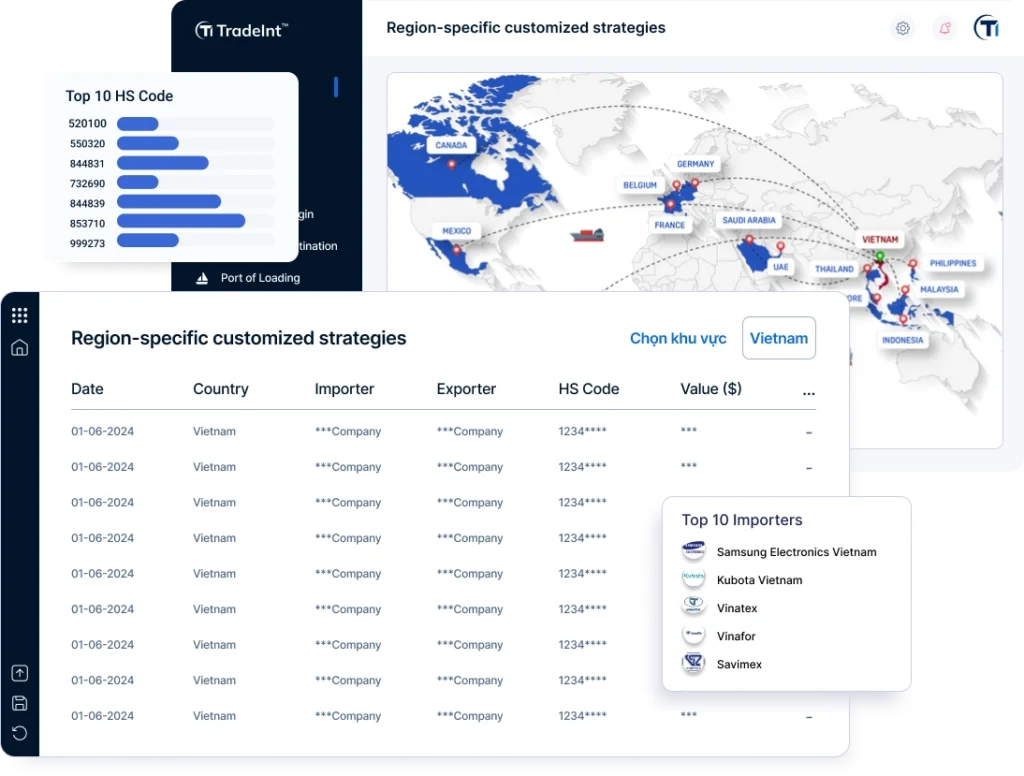
TradeInt Map Buyer Network Dashboard
Step 4: Analyze and Select New Markets
When one geography is blocked, you must identify where else your product is in high demand using TradeInt's country-level trade data analytics.
- Explore New Geographies: Analyze global markets (covering 200+ countries) to see where trade flows are rising despite regional instability.
- Identify Entry Points: Look for markets where your HS code shows high import frequency but no dominant supplier. TradeInt surfaces this country-level data alongside company records in a single page view, removing the need for manual spreadsheets.
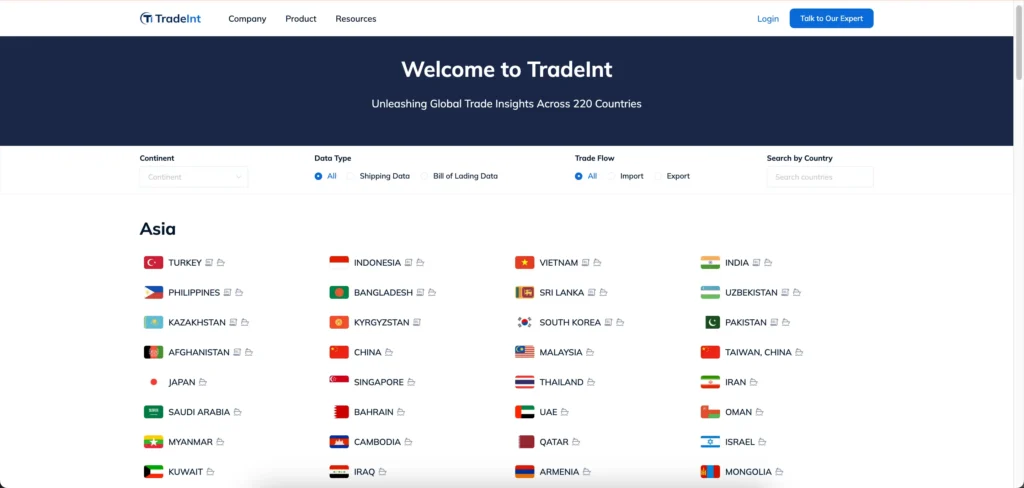
TradeInt Country Coverage List
Step 5: Proactive Monitoring and Smart Alerts
Route disruptions are dynamic. Staying ahead requires automated intelligence rather than repeated manual searches.
- Set Up Custom Alerts: Create email alerts for new shipments under your HS code or changes in competitor activity.
- Track Trade Lane Trends: Add high-priority buyers to a Watchlist. TradeInt will notify you the moment they record a new shipment or switch suppliers, allowing you to time your outreach at the exact moment their supply chain shows strain.
👉 Book a personalized demo with TradeInt now to see how the platform customizes data based on actual trade activities.
Why Should Import Export Businesses Leverage TradeInt to Find Alternative Buyers?
Generic trade directories list companies that "might" trade. TradeInt lists companies that actually do trade based on verified trade or shipment records. For Gulf exporters, the platform offers several critical advantages built for high-stakes environments:
- Verified Activity vs. Static Registration
- Data-Driven Buyer Reliability Assessment
- The "First-to-Market" Data Advantage
- Global Coverage Without Regional Blind Spots
1. Verified Activity vs. Static Registration
Every company appearing in TradeInt results is backed by a documented customs record. Unlike a directory listing that might feature a company that hasn't purchased in years, TradeInt's 500 million+ company profiles are linked to 10 billion+ shipment records. This ensures you are targeting active importers who are active in the market and practically in need of trade activities.
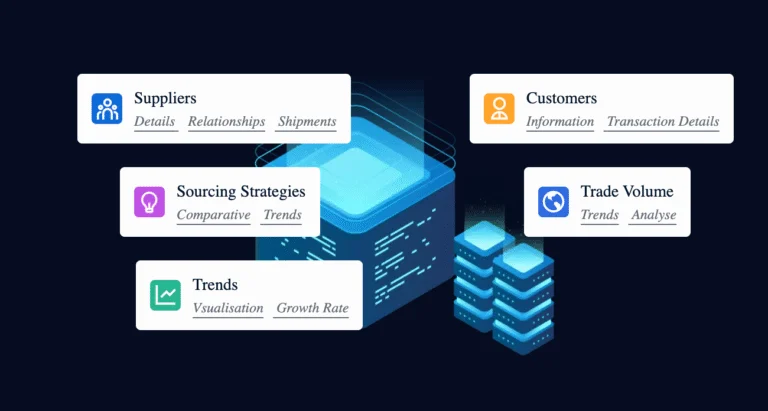
2. Data-Driven Buyer Reliability Assessment
Disruptions require "stable" partners who can navigate the logistical complexity of a route change. TradeInt's Bill of Lading (B/L) history allows you to perform deep-dive due diligence before the first contact:
- Volume & Scale: Instantly see if a buyer typically handles 500 tons or 5,000 tons per month to match your diverted capacity.
- Purchase Frequency: Identify buyers with consistent, recurring shipment records. These are high-stability partners with predictable demand cycles.
- Sourcing Diversification: Identify "plug-and-play" buyers who already source from multiple origins (e.g., both the Red Sea and the Persian Gulf). These companies are the most likely to accept cargo from alternative loading ports like Yanbu or Fujairah.
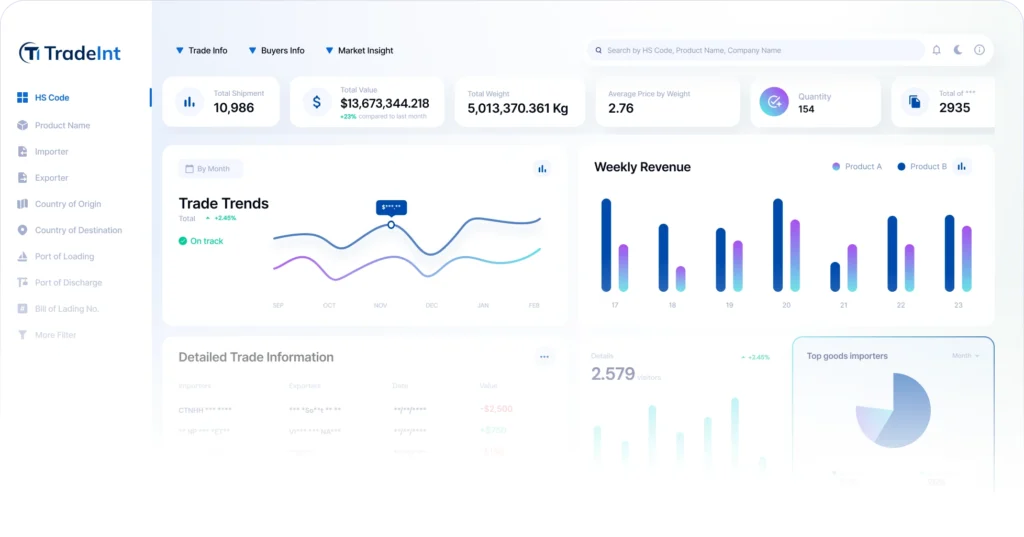
TradeInt Platform Dashboard
📖 Read TradeInt's expert analysis of the Middle East's top imports using TradeInt's latest verified trade data.
3. The "First-to-Market" Data Advantage
During a blockade, information is a perishable commodity.
TradeInt consistently releases new customs datasets ahead of the competition. This speed allows you to see which buyers are already adapting to new routes before your competitors even realize the market has shifted, giving you a critical first-mover window to secure shipping capacity and contracts.
4. Global Coverage Without Regional Blind Spots
When a primary export route is compromised, you cannot afford to be a prisoner of geography. TradeInt covers 200+ countries representing 95% of global trade flows.
- Total Visibility: Whether your pivot strategy targets South Asia, East Africa, or the Mediterranean, the data is available instantly.
- Uncovering New Hubs: If a disruption makes the Mediterranean more attractive than the Pacific, TradeInt surfaces top importers in regions like Greece, Italy, or Egypt—markets you may have never previously targeted.
💡 Learn how experts use verified trade records on TradeInt to update the latest market news and analyze insights that empower trade businesses' decisions. Read on: Iran oil export 2025
How Gulf Exporters Bypass Blockades and Find Alternative Buyers? Navigating Supply Chain Crises
When critical shipping routes like the Strait of Hormuz are disrupted, Gulf exporters, particularly Saudi Arabia and the UAE, do not stop operations. Instead, they combine infrastructure diversification with adaptive commercial strategies to maintain export continuity and protect high-value buyer relationships. Here's how:
- Reroute exports through alternative pipelines and ports: Use infrastructure like Saudi Arabia's East–West Pipeline (to Yanbu) and the UAE's Habshan–Fujairah pipeline to bypass chokepoints and maintain export flow outside the Strait of Hormuz.
- Shift cargo loading to safer terminals: Move shipments to Red Sea and Gulf of Oman ports, ensuring continued access to global shipping lanes despite disruptions.
- Switch to delivered-basis sales to retain buyers: Take control of logistics and deliver cargo directly, reducing risk for buyers and preserving long-term contracts.
- Increase spot market sales to capture flexible demand: Sell available cargo through spot tenders at premium prices, targeting buyers willing to transact quickly under changing conditions.
- Use regional hub ports for cargo consolidation: Reroute shipments through hubs like Fujairah and Oman, where smaller vessels feed into larger global distribution networks.
- Prioritize high-value markets and strategic buyers: Focus on major importers such as China, India, Japan, and South Korea to secure stable demand during disruptions.
- Adapt quickly to logistics constraints and cost pressures: Balance limited pipeline capacity, rising freight costs, and ongoing geopolitical risks while maintaining key trade relationships.
Why Alternative Routes Cannot Fully Replace the Strait of Hormuz? Key Constraints
Despite these adaptations, exporters face structural and cost limitations that shape their overall strategy:
- Limited infrastructure capacity means pipelines cannot fully replace the volume historically transported through the Strait of Hormuz.
- Rising logistics and transportation costs result from longer routes, higher freight rates, and increased insurance premiums.
- Ongoing geopolitical and infrastructure risks remain, particularly along alternative corridors such as the Red Sea.
These constraints require exporters to prioritize high-value buyers, optimize available capacity, and operate with the understanding that rerouting strategies provide mitigation, not full recovery, of disrupted trade flows.