Introduction
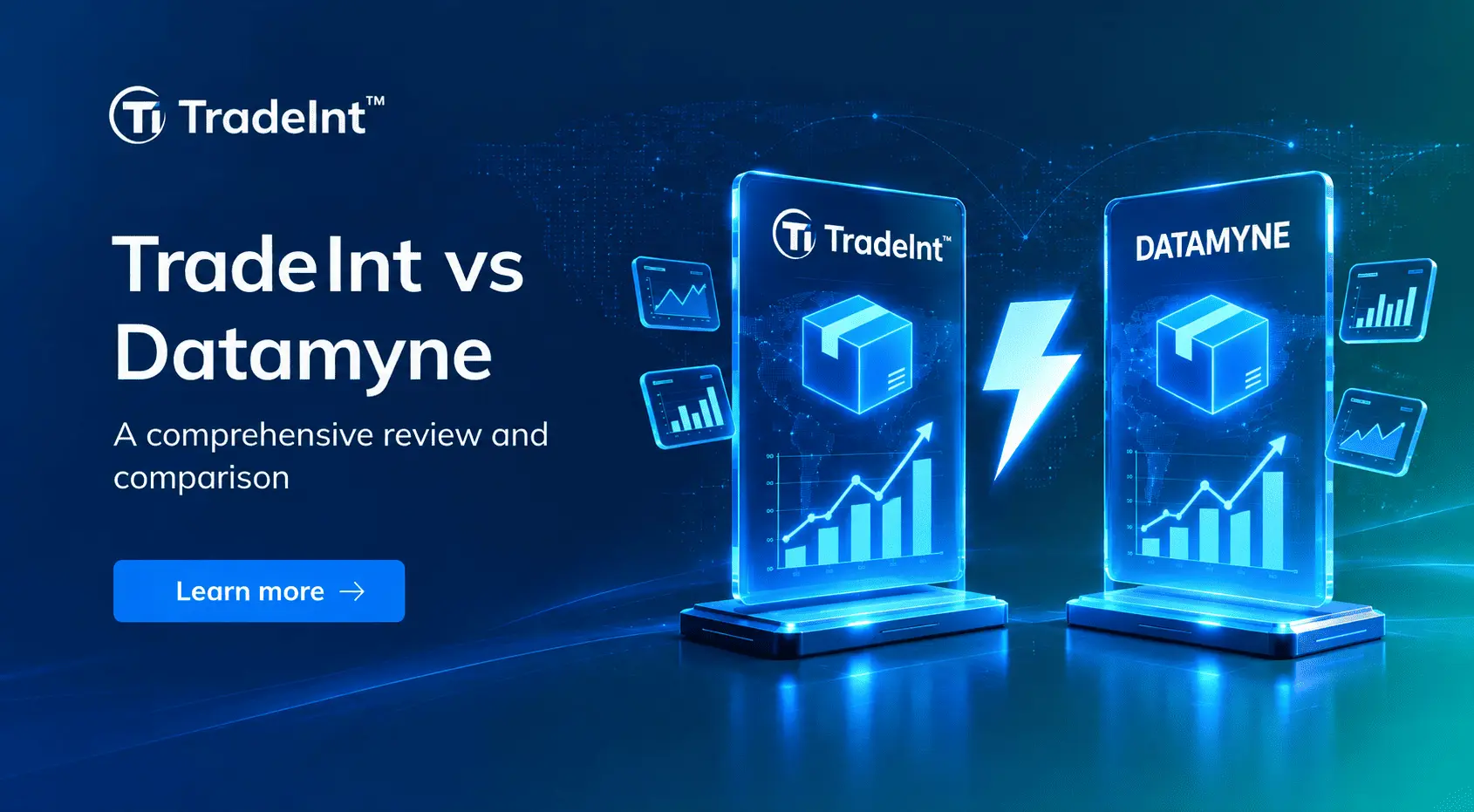
TradeInt vs Datamyne Descartes stand among the most recognized names in global trade intelligence. Both systems turn complex customs filings into actionable insights, helping businesses navigate a world of shifting trade routes, tariffs, and compliance demands.
In this article, we provide a detailed, data-driven comparison of TradeInt vs Datamyne, examining how each platform approaches trade visibility, what differentiates their analytics and data structures, and which solution best supports modern supply-chain strategies.

TradeInt is a global trade data platform providing access to over 10 billion verified import and export records. Its coverage spans over 200 countries and more than 80 customs data sources.
This article compares TradeInt and Datamyne for trade research. Use TradeInt to explore more detailed trade records and continue your research as new data becomes available. Explore trade records on TradeInt →
Trade Data Consultation
Maximize your market analysis accuracy with a personalized one-on-one session with a TradeInt specialist. Get help with HS code tracking, shipment verification, buyer–supplier research, and understanding global trade demand.
Introducing Descartes Datamyne
Descartes Datamyne is a global trade intelligence platform that provides verified import and export data across more than 230 markets. Built on decades of data stewardship and supported by ISO-certified quality controls, it transforms customs filings into reliable business intelligence for sourcing, compliance, and market research.
The platform goes beyond raw customs data with integrated tariff management, AI-powered visual analytics, and actionable supplier–buyer insights. Businesses use Datamyne to classify products accurately, analyze landed costs, uncover new trading partners, and benchmark competitors, making it a valuable tool for strategic sourcing, compliance, and market planning.
🔍 Wondering where Datamyne stands among today’s top trade intelligence platforms? Explore Top 5 Import Export Platforms to Simplify Global Trade to see which systems are redefining visibility, automation, and efficiency in global trade.
Datamyne Features & Services
| Feature / Service | What It Delivers | Value for Users |
|---|---|---|
| Global Data Access & Daily Updates | Official customs data refreshed frequently, including near real-time U.S. maritime imports. | Track trade activity as it happens, monitor supplier and buyer movements. |
| Advanced HTS & Tariff Management | HTS validation, duty/tariff comparison, landed cost evaluation. | Reduce landed costs, maintain compliance, optimize pricing across markets. |
| Market Intelligence & Visualization | AI-driven dashboards for trade flows, trends, and demand patterns. | Anticipate market shifts, benchmark competition, forecast supply volatility. |
| Supplier & Buyer Discovery | Verified shipment and corporate records tied to products and frequency. | Identify legitimate partners, support due diligence, streamline lead generation. |
✔ Lite ✔ Pro ✔ Premium ✔ EnterpriseTradeInt is a global trade data platform covering 200+ countries and 80+ customs sources. Learn about TradeInt →
Analyse Your Industrial Competitors
Combined Buyer & Supplier Directory with Granular Shipment Data & Insights, users can analysecommodity trading parners alongside near-real-time shipment metrics, identify high-performing supply chains, and even track product trends or logistics patterns through TradeInt's Trade Data Analytics suite.
Schedule a free demo with TradeInt today and learn how to start strategising for your supply chain with actionable trade data intelligence
What are the potential alternatives to Datamyne Descartes?
The alternatives to Datamyne Descartes include TradeInt (Trade Intelligence Global), a modern AI-powered trade-data platform that delivers world-class shipment visibility, broader emerging-market coverage, and more advanced supply chain intelligence based on legally sourced customs filings and early-release manifests.
Compared with Datamyne’s model focused on aggregated records, TradeInt provides unmatched trade data depth across 80+ customs jurisdictions, over 10 billion shipment records, and over 500 million company trade profiles, supported by AI and machine learning, international competitor & shipment tracking, granular B/L-level data, and automated anomaly detection.
This makes TradeInt a stronger choice for businesses that need real-time updates, high-frequency data refresh, verified importer–exporter intelligence, and more accurate supply-chain mapping, especially in fast-growing markets such as Türkiye, Brazil, Vietnam, Indonesia, Malaysia, Latin America regions, and key Eurasian hubs.
🔍 To understand how Bill of Lading data works in practice, check out our guide How to Read Bill of Lading: A Comprehensive Explanation, where we provide insights into spotting errors, understanding responsibilities, and protecting your cargo.
Top Key Advantages of TradeInt, the global trade data platform (as of 2025 version):
Modern AI-Driven Insights: Latest market trade trends, competitive import-export shift alerts, and big-data visualisations.
Unmatched Data Depth: 8B+ shipments, 500M+ company profiles, 80+ customs sources, strong emerging-market visibility.
Legally Sourced Customs Filings: Early-day releases ensure higher transparency and update frequency than legacy platforms.
Granular B/L Intelligence: Full HS codes, container details, cargo metrics, values, routing, and supply-chain link analysis.
Advanced Supplier–Buyer Mapping: Verified international trade partner directories + historical trade flows for accurate partner discovery.
Global Focus Beyond the U.S.: Strong in Asia, the Middle East, Eurasia, and emerging markets, where both ImportGenius and Descartes Datamyne are less granular.
Flexible Use Across Teams: Sourcing, compliance, fraud detection, market research, competitor monitoring, and strategic planning.
Datamyne vs TradeInt: A Comparative Analysis of Trade Intelligence Platforms
Descartes Datamyne, and TradeInt are the world’s leading global trade data platforms built to provide insight into global shipment activity and supply-chain relationships. Although they share similar goals, each platform offers a different approach to data coverage, analytical depth, and strategic application for businesses navigating international markets:
| Criteria | TradeInt (Trade Intelligence Global) | Descartes Datamyne |
|---|---|---|
| Overview | The modern, AI-powered platform delivering shipment visibility, predictive market insights, and real-time competitor tracking. Built for the future of global trade analysis. | A long-established data provider focused on delivering structured import-export records, primarily serving traditional data users. |
| Data Coverage | Unmatched 8B+ shipment records and over 500M+ company profiles across 80+ essential customs countries. | Extensive coverage across 230+ markets based on official customs filings worldwide. |
| Data Source & Frequency | Legally sourced customs filings and manifests with industry-leading frequent and early data releases. | Based on official customs filings, refreshed on standard schedules per market. |
| Country Data Focus | True global focus with strength in emerging and essential markets (e.g., TUR, BRA, MYS, IDN, VNM, RUS). | Core strength in US B/L data for North American trade compliance and analysis. |
| Granularity of Data | Detailed B/L records, HS codes, values, container type, and critical supply-chain links. | Provides standard shipment-level data with value-added fields. |
| Analytical Tools | Predictive AI, trend forecasting, and AI-driven competitive insights for market shifts. | Provides data visualization and HTS lookup tools for tariff calculation and compliance. |
| Supplier & Buyer Intelligence | Verified Global Partner Discovery with trade history and directory integration. | Combines shipment data with contact information for sourcing and sales. |
| Risk & Compliance Insights | Automated Anomaly Detection and Counterparty Verification to mitigate exposure. | Focuses on data for legal compliance and tariff optimization. |
| Visualization & Reporting | Customizable dashboards and trade flow visuals for quick decision-making. | Standard dashboards for market demand and commodity trends. |
| Pricing Approach | Flexible, tiered plans for SMBs and enterprises. | Pricing requires contact, typical of legacy vendors. |
| Customer Support | Consultative onboarding and fast response with partnership support. | Standard access to support and assistance services. |
| Unique Strength | Predictive AI insights with early data access and massive foundational coverage. | Reliable data and expertise in tariff/duty management. |
| Potential Limitation | Continuous data depth expansion needed in certain markets. | Less emphasis on modern AI and real-time mapping features. |
Conclusion
When comparing TradeInt vs Datamyne, the contrast reflects two distinct approaches to trade intelligence.
TradeInt is a global trade data platform that provides access to over 10 billion import export trade records across 200+ countries and 80+ official customs authorities. With over 500+ million company profiles and a 60M+ importers and exporters database, TradeInt combines verified shipment-level trade records, customs data, and bill of lading records with company-level detail, giving importers, exporters, freight forwarders, business consultants, and market researchers a single place to research suppliers, buyers, and market activity.
Descartes Datamyne, on the other hand, stands out for its ISO-certified data accuracy, tariff management tools, and customer-centric support, a strong choice for compliance-driven organizations seeking structured reliability.
Platforms like TradeInt take the next step forward, combining verified shipment data, AI-powered analytics, and real-time buyer-supplier directories to deliver actionable intelligence. TradeInt helps global trade businesses understand, anticipate, and act on the market with confidence. Schedule a free demo with TradeInt to learn more.