How to read bill of lading: A comprehensive guideline 2026
How to read bill of lading: identify shipper and consignee, verify container and seal numbers, check Incoterms, and spot errors before your shipment moves.

When the Panama port development deal was suspended, it sent shockwaves across the international trade community. While much of the media coverage focused on politics, the deeper concern for importers, exporters, and supply chain professionals was the sudden vulnerability exposed in a region long considered stable.
This incident isn’t just another headline. It’s a case study in why global trade professionals must adopt a resilient, data-driven mindset — and it highlights three urgent strategic lessons that can no longer be ignored.
⚠️ The takeaway? Assume instability, not stability. Trade routes that seem reliable today may not be tomorrow.
Smart trade operators are constantly asking:
According to the USDA, global coffee production reached approximately 10.5 million metric tons in 2024, up 4% year-over-year.
Nearly 90% of that volume came from the top coffee exporting countries, with Brazil and Vietnam alone accounting for 55% of total output. Brazil, the undisputed leader, made up 38%, while Vietnam contributed 17%, solidifying their positions at the top of any list of countries by coffee production.
Coffee prices surged in 2024, more than doubling due to drought concerns in Brazil. Global coffee inventories dropped to their lowest levels since 2018, adding more pressure to supply chains. Heading into 2025, climate volatility, shifting demand, and trade policy uncertainty are reshaping the strategies of all major coffee exporting countries.
In March 2021, the container ship Ever Given ran aground in the Suez Canal, one of the world’s most vital maritime trade routes. This incident blocked the canal for six days, halting the passage of approximately 12% of global trade.
The blockage caused a significant backlog, with over 369 ships delayed and an estimated $9.6 billion worth of goods held up each day. The ripple effects were felt worldwide, leading to delays in the delivery of essential goods, increased shipping costs, and disruptions in supply chains across various industries.
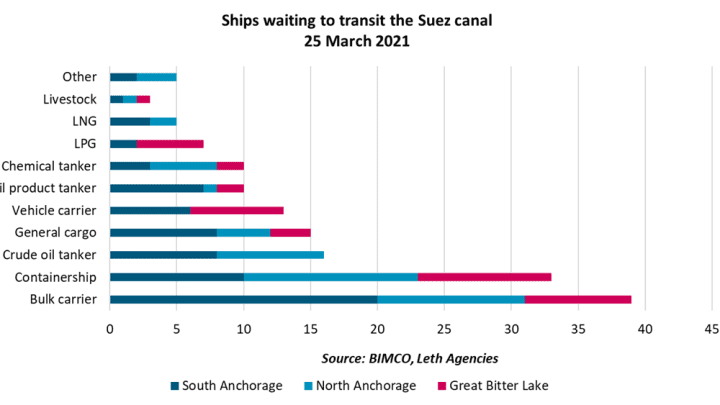
Image source: https://www.cnbc.com/2021/03/25/suez-canal-cargo-ship-blockage-could-cause-problems-for-the-globe.html
A powerful illustration of this comes from the 2021 Suez Canal blockage.
According to Port Economics, the blockage held up an estimated $9 billion worth of goods each day, translating to approximately $400 million per hour in delayed trade.
This single incident also:
For all global supply chain leaders, the cost of inaction is measurable: rising demurrage charges, missed delivery SLAs, inventory imbalances, and fractured supplier relationships. These disruptions don’t just delay containers — they delay decisions, erode customer trust, and destabilize bottom-line performance.
In an environment where time-to-react and data accuracy directly impact KPIs like OTIF (On-Time, In-Full), cost per shipment, and sourcing lead time, trade intelligence is your new weapon.
Platforms like TradeInt empower global businesses with granular bill of lading data, port-level trade activity alerts, shipping line reroute visibility, and buyer/supplier relationship mapping, enabling an optimized OTIF, logistic risk mitigation, and proactive communication across the multiple-tier supply chain.
Wish to learn the fundamentals of global customs data, helping you interpret and apply it across global trade operations?
Read this article: Navigating the World of Customs Data: A Comprehensive Guide
TradeInt is a global trade data platform providing access to over 10 billion verified import and export records. Its coverage spans over 200 countries and more than 80 customs data sources.
This article provides an overview of supply chain lessons from the Panama port deal. Use TradeInt to explore more detailed trade records and compare trade flows over time as new data becomes available. Search global shipment records →
The companies that thrive in uncertain trade climates aren’t the ones with the most resources — they’re the ones with the best-prepared plans.
Too often, contingency planning is an afterthought. But as this port suspension shows, failing to plan is planning to lose — especially in time-sensitive sectors like perishables, electronics, and raw materials.
This is where trade intelligence platforms like TradeInt come into play, where they allow you to:
📊 In other words: Trade data isn’t just for reports — it’s for deep insight and verification.
In today’s volatile trade landscape, relying solely on primary shipping routes is no longer a viable strategy.
For global traders, proactively identifying and planning for alternative reroute plans is not just a contingency tactic; it’s a strategic necessity to maintain supply chain continuity, manage costs, and meet customer expectations.
Want to know how to navigate alternative shipping lines with trade intelligence?
Read this article: What does Panama Port Deal mean for Global Supply Chain
>> Want to search other countries’ Trade Data? Try our Country Coverage Navigator for free
Gone are the days of relying on gut instinct or legacy supplier relationships. Today’s traders and sourcing managers need trade intelligence to respond to evolving trade dynamics.
With a trade intelligence platform like TradeInt Global, businesses gain access to:
In light of the Panama port suspension, here’s how that trade intelligence becomes operational:
This isn’t hypothetical — companies that have alternative port access mapped out via trade intelligence platform could have avoided massive delays and cost damage during events like the Ever Given Suez Canal blockage and Ukraine port closures.
The suspension of the Panama port deal is not just a headline — it’s a warning that:
🛑 Infrastructure can pause.
🚫 Ports can shut down.
📉 Trade routes can shift overnight.
But your business doesn’t have to be caught off guard.
By embracing trade intelligence platforms like TradeInt, global businesses can turn uncertainty into a strategic advantage. It’s not just about being reactive — it’s about being proactively prepared with international trade data that guides your business with smarter, faster, and safer decisions.
We are honored to have received prestigious accolades, including the Quality Choice and Happiest Users awards from Crozdesk, as well as recognition as a Top Performer on SourceForge and Slashdot. Explore our reviews on reputable review sites:
– G2: https://www.g2.com/products/tradeint/reviews
– SourceForge: https://sourceforge.net/software/product/TradeInt/
– Slashdot: https://slashdot.org/software/p/TradeInt/
– Crozdesk: https://crozdesk.com/software/tradeint
– Product Hunt: https://www.producthunt.com/products/tradeint
Trade Intelligence Global Pte. Ltd. is a distinguished leader in global trade solutions, delivering exceptional results for businesses worldwide. With a focus on excellence, innovation, and client success, Trade Intelligence Global empowers businesses to thrive in today’s interconnected global economy. To find out more, visit https://tradeint.com.
How to read bill of lading: identify shipper and consignee, verify container and seal numbers, check Incoterms, and spot errors before your shipment moves.
HS Code 8479 covers machines with individual functions not classified elsewhere. Explore sub-codes, product examples, and correct usage.
Analyze the impact of CK Hutchison’s Panama ports sale, such as port shifts, shipping route changes, supply chain impacts using Trade Intelligence platform.
Explore this blog to grasp the concept of shipping data, learn effective ways to utilize it, and uncover the myriad benefits it can offer to you.
Learn what a trade data provider is, what trade data includes, and which platforms are best for supplier discovery, competitor tracking, and market analysis.
United States export data 2025: Top partners Mexico ($336B) & Canada ($329B). Key exports: mineral fuels ($309B), machinery, and aircraft (HS 8800, $164B).