Malaysia vegetable import (HS Code 0709) hit new records in 2025, showing just how much the country now depends on foreign supply to meet everyday demand. China alone accounts for over 58% of the market, while India and Pakistan each play a role in shaping Malaysia’s market.
But behind the numbers are bigger questions: which imports truly strengthen food security, and which threaten local farmers?
Importation of vegetables to Malaysia: Current performance & forecast
Malaysia is increasingly dependent on vegetable imports to meet domestic demand, with import values projected at US$713.6 million in 2025, Statista reported.
This growth has gone beyond expected exports of US$169.6 million, showing that the country remains a net importer. The gross production value of the domestic vegetable market is projected to reach US$984.02 million in 2025, with steady annual growth of 2.64% pushing it toward US$1.09 billion by 2029.
Imports, meanwhile, are set to expand at a compound annual growth rate of 2.41%, reinforcing Malaysia’s reliance on foreign supply chains.
Moreover, this country’s fruit imports alone exceeded US$1 billion in 2024 and volumes, reaching 640,000 tonnes, up 20% compared with 2020, as analyzed by EastFruit.
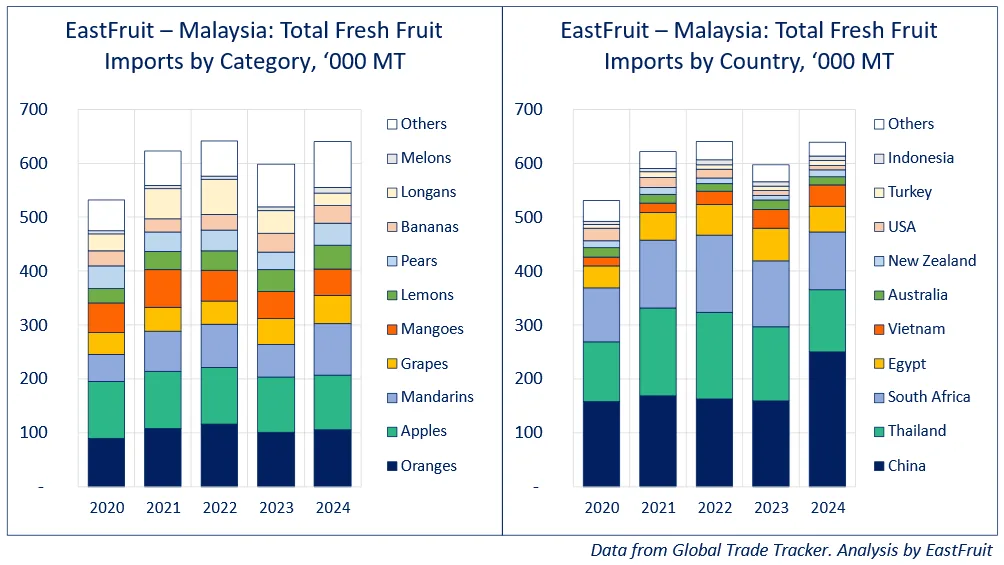
East Fruit Malaysia total fresh fruit imports by category
Meanwhile, Malaysia’s key suppliers include India, China, Thailand, and the United States, providing a mix of temperate fruits, vegetables, and off-season produce that cannot be produced locally (HS Code 0709). These imports also play a strategic role in supporting other industries, such as logistics and cold-chain infrastructure, and in sustaining Malaysia’s broader agri-food trade ecosystem.
💡 For a deeper understanding of Malaysia’s trade rules, especially which imported goods qualify for exemptions, check out the Malaysia import duty exemption list 2025.

TradeInt is a global trade data platform providing access to over 10 billion verified import and export records. Its coverage spans over 200 countries and more than 80 customs data sources.
This article provides a snapshot of Malaysia’s vegetable imports. Use TradeInt to explore more detailed trade records and continue tracking this market as new data becomes available. Search Malaysia vegetable import records →
Malaysia vegetable import: Where does Malaysia import vegetables from?
In January to July 2025, Malaysia vegetable import (HS Code 0709) totaled US$683 million, according to the latest TradeInt data, which tracks global trade flows across 90% of the world’s markets. China remains Malaysia’s dominant supplier, supported by stable logistics and consistent year-round exports, while India and Thailand strengthen regional sourcing diversification under the RCEP framework.
China – US$397.09M (58.18%): Malaysia’s primary vegetable supplier, benefiting from efficient trade routes and consistent shipment volumes.
India – US$87.97M (12.89%): Supplies a wide range of fresh and dried vegetables, driven by competitive pricing and regional demand.
Thailand – US$49.50M (7.25%): Trade supported by proximity and cross-border supply chains, particularly for tropical and leafy produce.
Vietnam – US$22.34M (3.27%): Increasing shipments of processed and specialty vegetables enhance its role in Malaysia’s import mix.
Pakistan – US$21.35M (3.13%): Maintains steady exports of onions and root vegetables to Malaysia’s wholesale markets.
Australia – US$17.77M (2.60%): Focused on high-quality, premium vegetable varieties for supermarkets and food service sectors.
Myanmar – US$17.62M (2.58%): Supplies niche vegetable varieties through regional land trade, maintaining stable export performance.
Source: TradeInt
#Top 1 Malaysia Vegetable Import Country: China - US$397B
According to TradeInt’s latest 2025 data, Malaysia imported US$397 million worth of vegetables (HS Code 0709) from China between January and July 2025, contributing over 58% market share. TradeInt’s real-time tracking of shipments, suppliers, and product values shows that imports were supported by major exporters in Hunan, Shenzhen, and Yunnan, reflecting steady supply chains and competitive pricing in fresh produce trade.
Hong Kong Taichuen Agricultural — US$2.36M (19.28% of shipments): A leading supplier with consistent export frequency and diverse vegetable categories.
Hunan Huachangcheng Agriculture — US$2.74M (8.40% of shipments): Key player in Malaysia’s import network, offering bulk shipments of fresh produce.
Shenzhen Huachangcheng Industrial — US$1.17M (6.26% of shipments): Focused on processed and packaged vegetable exports meeting Malaysia’s retail demand.
Yunnan Lehui Farm Produce Co. Ltd — US$1.09M (3.93% of shipments): Supplies premium-grade vegetables from Yunnan’s highland farms for niche import segments.
Hunan Duoying Agricultural Science — US$2.04M (3.36% of shipments): A consistent contributor to Malaysia’s vegetable imports with a strong logistics network across southern China.
Malaysia vegetable import (HS Code 0709) from China has increased sharply, rising from US$550 million (RM2.3 billion) in 2022 to US$882 million (RM4.1 billion) in 2024, the Fresh Plaza news reported, resulting in a growth of more than 26% per year and making China the country’s largest vegetable supplier.
Despite the growth, the issue is that Malaysia already produces more than enough of certain crops, where cucumbers, tomatoes, spinach, eggplants, and long beans all have self-sufficiency ratios above 100%. Yet the steady importation of vegetables to Malaysia has resulted in oversupply.
As a consequence, farm-gate prices in Cameron Highlands went down to RM0.50 – 0.60 per kilogram (US$0.11–0.13/kg) for cucumbers and cabbages, far below production cost. For many farmers, imports of HS Code 0709 vegetables in Malaysia are no longer complementing local supply but directly undercutting it.

Oversupply has caused a decline in the price of some vegetables in Cameron Highlands, Malaysia. Source: Hills & Cheryl Corporate Advisory
If the surge continues, small and medium-scale farmers may leave the sector, reducing local production and weakening food security goals set in the 13th Malaysia Plan. The situation is made worse by China’s global dominance as the largest vegetable exporter, with US$18.66 billion in worldwide exports in 2024.
To address this, policymakers such as Ho Chi Yang have called for stricter controls on Malaysia vegetable import, including quotas for crops where local output is already sufficient. He also suggested subsidies and longer land leases to help farmers stay competitive, showcasing farmers protection and food security regulations in this country is necessary.
🇲🇾 Malaysia relies on vegetable imports to fulfill consumption demand. But in contrast, this country is a leading exporter in many categories, such as E&E products.
Discover the top 5 export products of Malaysia in this article.
#Top 2 Malaysia Vegetable Import Country: India - US$88B
According to TradeInt’s 2025 shipment data, India remains one of Malaysia’s key rice suppliers, with Modern Store M Sdn Bhd and VR Express Cargo accounting for over 80% of total import value. In fact, the country imported US$88 million worth of vegetables from India between January and July 2025.
Modern Store M Sdn Bhd — US$555,610 (45.24% of shipments): Leading the import network with consistent sourcing from India to support domestic retail and wholesale distribution.
VR Express Cargo — US$284,435 (28.37% of shipments): Major logistics partner handling bulk shipments, ensuring efficient cold-chain transportation for Indian produce.
ASP Logistics International M S B — US$84,225 (7.32% of shipments): Focused on specialized handling for perishable agricultural goods and processed vegetables.
Rens Marketing Enterprise — US$35,317 (5.52% of shipments): Mid-sized importer catering to local grocery chains and regional food markets.
Sukkari Jaya Resources — US$8,335 (3.17% of shipments): Niche supplier serving smaller-scale buyers and specialty markets for Indian vegetables.
India is an important partner in Malaysia vegetable import (HS Code 0709), ranking among the top five suppliers. Statiscally, Malaysia purchased about US$114 million worth of Indian vegetables in 2024, representing 5.47% of India’s total vegetable exports. This makes Malaysia one of the key Asian markets for India, alongside Bangladesh and the UAE.
The importation of vegetables in the HS Code 0709 section to Malaysia from India is supported by long-standing trade and cultural ties. India and Malaysia have enjoyed close relations since 1957, and agricultural trade has become a steady part of this partnership.
Imported HS Code 0709 vegetables in Malaysia from India often include staples like onions, okra, and eggplants, as well as fruits that overlap with vegetable trade categories such as bananas, mangoes, and pomegranates. These products are popular in Malaysia because of their freshness, affordability, and the strong reputation of Indian produce.
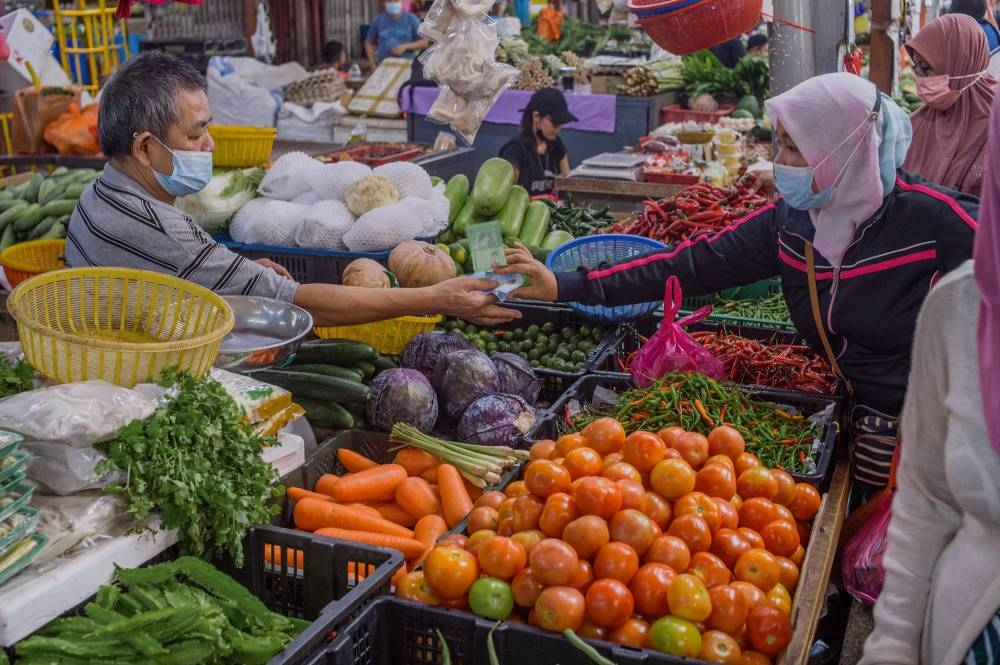
Vegetable market in Malaysia. Source: Yahoo News Malaysia
For Malaysia, India’s role is different from larger suppliers like China or Argentina. Rather than creating oversupply, Indian exports complement local production by filling seasonal gaps and supplying varieties that are not always available domestically. This makes India a valuable, reliable partner in Malaysia vegetable import, helping diversify sources while strengthening bilateral trade.
#Top 3 Malaysia Vegetable Import Country: Thailand - US$49.5B
According to TradeInt’s 2025 shipment data, Thailand remains a major supplier of fresh vegetables to Malaysia, with over 50,000 total shipments recorded. The market is led by a few dominant exporters who collectively account for more than 60% of Thailand’s total export share. These suppliers play a key role in maintaining Malaysia’s steady vegetable import flow and regional agri-trade connectivity.
IKM Energy Grenwd Ltd PT – 7.17M US$ (24.36%) – Thailand’s largest vegetable exporter with the widest shipment network.
KMI Energy Grenwd Ltd PT – 3.32M US$ (11.27%) – Major contributor to Malaysia’s processed vegetable imports.
Sahadee Export Import Co Ltd – 3.29M US$ (11.20%) – Known for premium-grade packaged produce.
S T V Trading Agency Co Ltd – 2.39M US$ (8.13%) – Specializes in large-volume exports to major retailers.
KMI Energy Grnwd LTA PT – 2.10M US$ (7.14%) – Expanding distribution channels across ASEAN markets.
Samai Food Trading – 1.53M US$ (5.20%) – Focuses on diverse product categories and niche exports.
Malaysia’s import situation from Thailand highlights a deepening agri-trade relationship driven by rising food demand and regional supply chain efficiency.
Over the past few years, imports of Thai vegetables have grown steadily, reflecting Malaysia’s reliance on Thailand’s diverse and high-quality produce. The two countries benefit from close logistics networks and favorable ASEAN trade policies, which streamline cross-border flows.
Thailand has become one of Malaysia’s primary suppliers of both fresh and processed vegetables, complementing imports from China and Indonesia. This expansion aligns with broader agricultural growth trends, a 51.5% surge.) in Malaysia’s imports from Thailand between 2019 and 2023, underscoring how Malaysia continues to diversify its food sources while ensuring supply security.
Beyond vegetables, the import portfolio also includes staples such as Thai rice, reinforcing Thailand’s role as a critical food supplier and Malaysia’s partner in sustaining regional agricultural trade stability.
#Top 4 Malaysia Vegetable Import Country: Vietnam - US$22.3B
Vietnam is one of Malaysia’s closest partners in agriculture, and Malaysia vegetables import of HS Code 0709 from Vietnam has grown steadily in recent years.
In 2024, Vietnam’s vegetable exports under HS Code 0709 to Malaysia expanded by 35% compared to 2023, according to the Nhan Dan news, even as its overall vegetable exports to other major markets such as China declined. This highlights how Malaysia has become a reliable and growing outlet for Vietnamese produce.
For Malaysia, imported HS Code 0709 vegetables in Malaysia from Vietnam serve both economic and cultural needs. The two countries share similar consumer habits, which makes Vietnamese products, such as leafy greens, beans, and fruits that overlap with vegetable trade, more easily accepted by Malaysian consumers.
The relatively low trade barriers under ASEAN and regional free trade agreements also make the importation of vegetables to Malaysia from Vietnam smoother than with many other suppliers.
In fact, Vietnam remains among the top five sources of vegetables for Malaysia, following China, Argentina, and India. Unlike imports from China, which have raised concerns about oversupply and falling farm-gate prices, Vietnamese vegetables often complement local production by providing off-season supply and diversifying product variety.
Malaysia vegetable import from Vietnam reflects a balanced partnership. It benefits Malaysian consumers with affordable and fresh supply, while giving Vietnam a stable market as it seeks to reduce reliance on China. This two-way agricultural trade also strengthens broader economic ties, making Vietnam a consistent and strategic contributor to Malaysia’s food security.
🇲🇾 Malaysia relies on vegetable imports to fulfill consumption demand. But in contrast, this country is a leading exporter in many categories, such as E&E products.
Discover the top 5 export products of Malaysia in this article.
Conclusion
Malaysia vegetable import in 2024 climbed steadily, with China leading by far, Argentina offering stable volumes, India complementing local supply, Vietnam expanding its share, and Thailand facing stricter quality checks. Together, these flows confirm that Malaysia remains a net importer, with policy shifts such as the new sales tax and safety regulations shaping both demand and supply. The key takeaway is clear: Malaysia’s food security depends on how well it balances foreign reliance with local resilience.
For businesses, the challenge is no longer just sourcing vegetables but managing the bigger picture: identifying dependable partners, keeping pace with shifting import rules, and staying ahead of competitors who move faster in the same market. This is exactly where TradeInt turns pressure into advantage, helping importers map reliable suppliers, track shipments in real time, and uncover opportunities before rivals do. Make us your next logistics partner now!